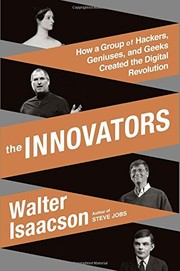
The Innovators: How a Group of Hackers, Geniuses, and Geeks Created the Digital Revolution
Attached file
Source files are not served on the public archive. Metadata and citations remain available.
Cited by (710)
- 1950: This was in 1950, five years before Bill Gates and Steve Job... whole source
This was in 1950, five years before Bill Gates and Steve Jobs were born.
- 1955: In order to serve as the pathfinder for this mission, he enr... whole source
In order to serve as the pathfinder for this mission, he enrolled at Berkeley to study computer science, earning his doctorate in 1955.
- 1957: He finally was hired in 1957 to work on magnetic storage sys... whole source
He finally was hired in 1957 to work on magnetic storage systems at the Stanford Research Institute, an independent nonprofit set up by the…
- 1925: Doug Engelbart (1925–2013). whole source
Doug Engelbart (1925–2013).
- 2013: Doug Engelbart (1925–2013). whole source
Doug Engelbart (1925–2013).
- 1968: Stewart Brand (center
) assisting at the Mother of All Demos... whole source
Stewart Brand (center ) assisting at the Mother of All Demos in 1968.
- 1968: In short, Engelbart showed, back in 1968, nearly everything ... whole source
In short, Engelbart showed, back in 1968, nearly everything that a networked personal computer does today.
- 1968: The latter mission had seemed rather quirky when Engelbart b... whole source
The latter mission had seemed rather quirky when Engelbart began working on it, but when he showed off all of its elements in his December 1…
- 1940: Kay had learned to love both the sciences and humanities as ... whole source
Kay had learned to love both the sciences and humanities as a child in central Massachusetts, where he was born in 1940.
- 1970: In an academic paper he delivered in 1970, just after Kay ca... whole source
In an academic paper he delivered in 1970, just after Kay came to SAIL, McCarthy described his vision of time-sharing systems that used term…
- 1971: So after two years of toiling among the time-sharing evangel... whole source
So after two years of toiling among the time-sharing evangelists at SAIL, Kay accepted an offer in 1971 to join a corporate research center…
- 1970: XEROX PARC
In 1970 the Xerox Corporation followed in the fo... whole source
XEROX PARC In 1970 the Xerox Corporation followed in the footsteps of the Bell System by launching a lab dedicated to pure research.
- 1973: When it was completed in March 1973, it featured a graphic, ... whole source
When it was completed in March 1973, it featured a graphic, painted by Kay, of Sesame Street’s Cookie Monster holding the letter “C.
- 1940: Alan Kay (1940– ) at Xerox PARC in 1974. whole source
Alan Kay (1940– ) at Xerox PARC in 1974.
- 1974: Alan Kay (1940– ) at Xerox PARC in 1974. whole source
Alan Kay (1940– ) at Xerox PARC in 1974.
- 1972: Kay’s 1972 sketch for a Dynabook. whole source
Kay’s 1972 sketch for a Dynabook.
- 1959: The son of an Army colonel stationed
at the Pentagon, he had... whole source
The son of an Army colonel stationed at the Pentagon, he had gone west to study engineering at Berkeley in 1959.
- 1962: His protest lasted only two days (his father came to take hi... whole source
His protest lasted only two days (his father came to take him home), but he reenrolled at Berkeley in 1962 and resumed his rebellious ways.
- 1968: He served two years in jail as a draft resister and then, in... whole source
He served two years in jail as a draft resister and then, in 1968, moved to Palo Alto, driving down in a Volkswagen van with a baby daughter…
- 1945: Felsenstein’s community-organizing streak and love for elect... whole source
Felsenstein’s community-organizing streak and love for electronics were instilled as a child in Philadelphia, where he was born in 1945.
- 1963: He went to Berkeley in 1963 to study electrical engineering,... whole source
He went to Berkeley in 1963 to study electrical engineering, just as the revolt against the Vietnam War was brewing.
- 1964: He arrived back on campus in October 1964 just as the Free S... whole source
He arrived back on campus in October 1964 just as the Free Speech Movement protests erupted, and, like a sci-fi hero, he decided to use his…
- 1975: ” When the potluck dinners petered out early in 1975, Moore ... whole source
” When the potluck dinners petered out early in 1975, Moore and French and Felsenstein decided to start a new club.
- 1975: ”
107
This first meeting of the Homebrew Computer Club was ... whole source
” 107 This first meeting of the Homebrew Computer Club was held on a rainy Wednesday, March 5, 1975, in Gordon French’s Menlo Park garage.
- 1974: When the Intel 8080 microprocessor was about to come out in ... whole source
When the Intel 8080 microprocessor was about to come out in April 1974, Ed Roberts was able to score some handwritten data sheets describing…
- 1941: Ed Roberts (1941–2010). whole source
Ed Roberts (1941–2010).
- 2010: Ed Roberts (1941–2010). whole source
Ed Roberts (1941–2010).
- 1975: Altair on the cover, January 1975. whole source
Altair on the cover, January 1975.
- 1975: ) So the January 1975 issue of Popular Electronics
featured ... whole source
) So the January 1975 issue of Popular Electronics featured a fake version.
- 1975: ”
116
THE HOMEBREW DEBUT
At the first meeting of the Homeb... whole source
” 116 THE HOMEBREW DEBUT At the first meeting of the Homebrew Computer Club in March 1975, the Altair was the centerpiece.
- 1975: By the time of the third Homebrew meeting, in April 1975, he... whole source
By the time of the third Homebrew meeting, in April 1975, he had made an amusing discovery.
- 1953: Paul Allen (1953– ) and Bill Gates (1955– ) in the Lakeside ... whole source
Paul Allen (1953– ) and Bill Gates (1955– ) in the Lakeside school’s computer room.
- 1955: Paul Allen (1953– ) and Bill Gates (1955– ) in the Lakeside ... whole source
Paul Allen (1953– ) and Bill Gates (1955– ) in the Lakeside school’s computer room.
- 1977: Gates arrested for speeding, 1977. whole source
Gates arrested for speeding, 1977.
- 1975: CHAPTER NINE
SOFTWARE
When Paul Allen wandered up to the c... whole source
CHAPTER NINE SOFTWARE When Paul Allen wandered up to the cluttered news kiosk in the middle of Harvard Square and saw the January 1975 Pop…
- 1955: 1
Unlike the computer pioneers before him, Gates, who was b... whole source
1 Unlike the computer pioneers before him, Gates, who was born in 1955, had not grown up caring much about the hardware.
- 1974: ”
3
What Gates and Allen embarked on that December day in 1... whole source
” 3 What Gates and Allen embarked on that December day in 1974 when they first saw the Popular Electronics cover would lead to the creation…
- 1968: ”
19
The Lakeside Programming Group’s first job came that f... whole source
” 19 The Lakeside Programming Group’s first job came that fall of 1968.
- 1970: Then, in the fall of 1970, the school started buying time on... whole source
Then, in the fall of 1970, the school started buying time on a PDP-10 from a company in Portland, Oregon, called Information Sciences, Inc.
- 1971: In the fall of 1971, at the beginning of Gates’s junior year... whole source
In the fall of 1971, at the beginning of Gates’s junior year, Lakeside merged with a girls’ school.
- 1972: 35
They brought cots to campus and, like old times, spent m... whole source
35 They brought cots to campus and, like old times, spent many nights in the computer room that summer of 1972, communing with a PDP-10.
- 1973: ”
40
The final semester of Gates’s senior year, in the spri... whole source
” 40 The final semester of Gates’s senior year, in the spring of 1973, he and Allen were recruited by the Bonneville Power Administration,…
- 1969: To avoid sparking an antiwar protest, it was smuggled into t... whole source
To avoid sparking an antiwar protest, it was smuggled into the Aiken Lab early one Sunday morning in 1969.
- 1974: 50
As Gates was preparing to begin his sophomore year in th... whole source
50 As Gates was preparing to begin his sophomore year in the summer of 1974, he convinced Allen to move to the Boston area and take a job w…
- 1974: ”
54
Gates’s haphazard life at Harvard was suddenly upended... whole source
” 54 Gates’s haphazard life at Harvard was suddenly upended in December 1974, halfway through his sophomore year, when Allen arrived at his…
- 1975: By late February 1975, after eight weeks of intense coding, ... whole source
By late February 1975, after eight weeks of intense coding, they got it down, brilliantly, into 3.
- 1975: So in the spring of 1975, Allen moved to Albuquerque, a city... whole source
So in the spring of 1975, Allen moved to Albuquerque, a city he had only recently learned was not in Arizona.
- 1975: He finished his sophomore year that spring of 1975, then fle... whole source
He finished his sophomore year that spring of 1975, then flew down to Albuquerque for the summer and decided to stay there rather than retur…
- 1975: SOFTWARE WANTS TO BE FREE
In June 1975, the month that Gate... whole source
SOFTWARE WANTS TO BE FREE In June 1975, the month that Gates moved to Albuquerque, Roberts decided to send the Altair on the road as if it…
- 1978: ”
80
At the end of 1978 Gates and Allen moved their company... whole source
” 80 At the end of 1978 Gates and Allen moved their company from Albuquerque back home to the Seattle area.
- 1971: In the fall of 1971, Wozniak read an article in Esquire
desc... whole source
In the fall of 1971, Wozniak read an article in Esquire describing how “phone phreaks” had created a device that emitted just the right tone…
- 1974: When he returned in the fall of 1974, he went to work at Ata... whole source
When he returned in the fall of 1974, he went to work at Atari under Nolan Bushnell and Al Alcorn.
- 1955: Steve Jobs (1955–2011) and Steve Wozniak (1950– ) in 1976. whole source
Steve Jobs (1955–2011) and Steve Wozniak (1950– ) in 1976.
- 2011: Steve Jobs (1955–2011) and Steve Wozniak (1950– ) in 1976. whole source
Steve Jobs (1955–2011) and Steve Wozniak (1950– ) in 1976.
- 1950: Steve Jobs (1955–2011) and Steve Wozniak (1950– ) in 1976. whole source
Steve Jobs (1955–2011) and Steve Wozniak (1950– ) in 1976.
- 1975: The March 1975 first gathering of the Homebrew Computer Club... whole source
The March 1975 first gathering of the Homebrew Computer Club came just after Wozniak had finished designing Breakout .
- 1975: on Sunday, June 29, 1975, a historic milestone occurred: Woz... whole source
on Sunday, June 29, 1975, a historic milestone occurred: Wozniak tapped a few keys on his keyboard, the signal was processed by a microproce…
- 1977: ”
By early 1977 a few other hobbyist computer companies had... whole source
” By early 1977 a few other hobbyist computer companies had bubbled up from the Homebrew and other such cauldrons.
- 1979: In May 1979 Fylstra demonstrated an early version of VisiCal... whole source
In May 1979 Fylstra demonstrated an early version of VisiCalc at Rosen’s Personal Computer Forum in his hometown of New Orleans.
- 1980: But when that option was debated at a July 1980 meeting, IBM... whole source
But when that option was debated at a July 1980 meeting, IBM’s CEO Frank Carey dismissed it.
- 1980: So on July 21, 1980, he placed a call to Bill Gates and aske... whole source
So on July 21, 1980, he placed a call to Bill Gates and asked to see him right away.
- 1981: The IBM PC was unveiled, with a list price of $1,565, at New... whole source
The IBM PC was unveiled, with a list price of $1,565, at New York’s Waldorf Astoria in August 1981.
- 1979: Jobs’s two main visits with his team to Xerox PARC were in D... whole source
Jobs’s two main visits with his team to Xerox PARC were in December 1979.
- 1983: Apple launched Lisa in January 1983 and then, more successfu... whole source
Apple launched Lisa in January 1983 and then, more successfully, Macintosh a year later.
- 1984: 110
The Macintosh launch was accompanied by a memorable ad,... whole source
110 The Macintosh launch was accompanied by a memorable ad, “1984,” that showed a young heroine outracing the authoritarian police to throw…
- 1981: In fact, on the day that IBM launched its PC in August 1981,... whole source
In fact, on the day that IBM launched its PC in August 1981, Gates was visiting Jobs at Apple, which was a regular occurrence since Microsof…
- 1982: So in 1982, repelled by the selfishness that seemed to perva... whole source
So in 1982, repelled by the selfishness that seemed to pervade Reagan-era society as well as software entrepreneurs, Stallman embarked on a…
- 1971: The operating system Stallman decided to develop was one tha... whole source
The operating system Stallman decided to develop was one that would be similar to and compatible with UNIX, which had been developed at Bell…
- 1985: In the March 1985 issue of Dr. whole source
In the March 1985 issue of Dr.
- 1992: 137
By the fall of 1992, a year after its release, Linux’s ... whole source
137 By the fall of 1992, a year after its release, Linux’s newsgroup on the Internet had tens of thousands of users.
- 2009: By 2009 the Debian version 5. whole source
By 2009 the Debian version 5.
- 1944: Larry Brilliant (1944– ) and Stewart Brand on Brand’s houseb... whole source
Larry Brilliant (1944– ) and Stewart Brand on Brand’s houseboat in 2010.
- 2010: Larry Brilliant (1944– ) and Stewart Brand on Brand’s houseb... whole source
Larry Brilliant (1944– ) and Stewart Brand on Brand’s houseboat in 2010.
- 1942: William von Meister (1942–1995). whole source
William von Meister (1942–1995).
- 1981: In 1981 Lawrence Landweber at the University of Wisconsin pu... whole source
In 1981 Lawrence Landweber at the University of Wisconsin pulled together a consortium of universities that were not connected to the ARPANE…
- 1982: EMAIL AND BULLETIN BOARDS
“The street finds its own uses fo... whole source
EMAIL AND BULLETIN BOARDS “The street finds its own uses for things,” William Gibson wrote in “Burning Chrome,” his 1982 cyberpunk story.
- 1972: And in 1972 the ARPANET got its first. whole source
And in 1972 the ARPANET got its first.
- 1987: By 1987 the topics of its online forums, known as conference... whole source
By 1987 the topics of its online forums, known as conferences, ranged from the Grateful Dead (the most popular) to UNIX programming, from ar…
- 1937: division of the German zeppelin company that operated the Hi... whole source
division of the German zeppelin company that operated the Hindenburg until its 1937 explosion, and then ran a division of a chemical company…
- 1942: His style rubbed off on young Bill, born in 1942, who seemed... whole source
His style rubbed off on young Bill, born in 1942, who seemed hell-bent on matching his father’s flameouts in flamboyance if not in severity.
- 1958: Born in 1958 and raised in Hawaii, with a placid temperament... whole source
Born in 1958 and raised in Hawaii, with a placid temperament that made it seem as if he had been nurtured by dolphins, Steve Case had a paci…
- 1980: 20
In early 1980 he applied for a job at the J. whole source
20 In early 1980 he applied for a job at the J.
- 1981: His passion was to help companies that wanted to pioneer the... whole source
His passion was to help companies that wanted to pioneer the electronic frontier, so when his brother Dan joined Hambrecht & Quist in 1981,…
- 2000: There were many suggestions, such as Crossroads and Quantum ... whole source
There were many suggestions, such as Crossroads and Quantum 2000, but they all sounded like religious retreats or mutual funds.
- 1985: “Our big bet, even back in 1985, was what we called communit... whole source
“Our big bet, even back in 1985, was what we called community,” he recounted.
- 1992: “It now seems really silly, but up until 1992, it was illega... whole source
“It now seems really silly, but up until 1992, it was illegal to connect a commercial service like AOL to the Internet,” Steve Case said.
- 1955: Tim Berners-Lee (1955– ). whole source
Tim Berners-Lee (1955– ).
- 1971: Marc Andreessen (1971– ). whole source
Marc Andreessen (1971– ).
- 1974: Justin Hall (1974– ) and Howard Rheingold (1947– ) in 1995. whole source
Justin Hall (1974– ) and Howard Rheingold (1947– ) in 1995.
- 1955: ”
2
Berners-Lee was born in 1955, the same year as Bill Gat... whole source
” 2 Berners-Lee was born in 1955, the same year as Bill Gates and Steve Jobs, and he considered it a lucky time to be interested in electro…
- 1894: By 1894 it had gone through eighty-nine editions and sold 1,... whole source
By 1894 it had gone through eighty-nine editions and sold 1,188,000 copies.
- 1984: In September 1984 he arrived back there to work with the gro... whole source
In September 1984 he arrived back there to work with the group that was responsible for gathering the results of all of the experiments bein…
- 1963: Envisioned by Bush in his description of a memex machine, it... whole source
Envisioned by Bush in his description of a memex machine, it was named in 1963 by the tech visionary Ted Nelson, who dreamed up a brilliantl…
- 1990: 21
By the end of 1990 he had created a suite of tools that ... whole source
21 By the end of 1990 he had created a suite of tools that allowed his network to come to life: a Hypertext Transfer Protocol (HTTP) to all…
- 1989: In March 1989 Berners-Lee had his design in place and offici... whole source
In March 1989 Berners-Lee had his design in place and officially submitted a funding proposal to the top managers at CERN.
- 1971: The man, or overgrown kid, most responsible for Mosaic was a... whole source
The man, or overgrown kid, most responsible for Mosaic was a gentle but intense undergraduate named Marc Andreessen, a corn-fed six-foot-fou…
- 1992: ”
36
When Andreessen saw the Web demonstrated in November 1... whole source
” 36 When Andreessen saw the Web demonstrated in November 1992, he was blown away.
- 1993: 38
On January 23, 1993, with just a little more fanfare tha... whole source
38 On January 23, 1993, with just a little more fanfare than Berners-Lee had indulged in when launching the Web, marca@ncsa.
- 2013: ”
51
In 2013 Berners-Lee began reviving some of the activit... whole source
” 51 In 2013 Berners-Lee began reviving some of the activities of the W3C’s Micropayments Markup Working Group.
- 2009: ”
52
Andreessen said he hoped that Bitcoin,
III
a digital ... whole source
” 52 Andreessen said he hoped that Bitcoin, III a digital currency and peer-to-peer payment system created in 2009, might turn out to be a…
- 1993: “If I had a time machine and could go back to 1993, one thin... whole source
“If I had a time machine and could go back to 1993, one thing I’d do for sure would be to build in Bitcoin or some similar form of cryptocur…
- 1996: On his site, he posted an offer to teach people HTML publish... whole source
On his site, he posted an offer to teach people HTML publishing if they would host him for a night or two, and in the summer of 1996 he trav…
- 1997: In 1997 John Barger, who produced a fun website called Robot... whole source
In 1997 John Barger, who produced a fun website called Robot Wisdom, coined the term weblog , and two years later a web designer named Peter…
- 2014: IV
By 2014 there would be 847 million blogs in the world. whole source
IV By 2014 there would be 847 million blogs in the world.
- 2001: Throughout 2001 Williams worked around the clock from his ap... whole source
Throughout 2001 Williams worked around the clock from his apartment or in borrowed space to keep Blogger running.
- 2002: ”
76
Things began to turn around in 2002. whole source
” 76 Things began to turn around in 2002.
- 1991: ”
79
WARD CUNNINGHAM, JIMMY WALES, AND WIKIS
When he launc... whole source
” 79 WARD CUNNINGHAM, JIMMY WALES, AND WIKIS When he launched the Web in 1991, Tim Berners-Lee intended it to be used as a collaboration t…
- 1951: Dan Bricklin (1951– ) and Ev Williams (1972– ) in 2001. whole source
Dan Bricklin (1951– ) and Ev Williams (1972– ) in 2001.
- 1972: Dan Bricklin (1951– ) and Ev Williams (1972– ) in 2001. whole source
Dan Bricklin (1951– ) and Ev Williams (1972– ) in 2001.
- 2001: Dan Bricklin (1951– ) and Ev Williams (1972– ) in 2001. whole source
Dan Bricklin (1951– ) and Ev Williams (1972– ) in 2001.
- 2001: But the wiki concept was not widely known beyond software en... whole source
But the wiki concept was not widely known beyond software engineers until January 2001, when it was adopted by a struggling Internet entrepr…
- 1966: Jimmy Wales was born in 1966 in Huntsville, Alabama, a town ... whole source
Jimmy Wales was born in 1966 in Huntsville, Alabama, a town of rednecks and rocket scientists.
- 1996: Jumping on these bandwagons, Wales and two friends in 1996 s... whole source
Jumping on these bandwagons, Wales and two friends in 1996 started a venture that they dubbed BOMIS, for Bitter Old Men in Suits, and began…
- 2001: Cunningham was supportive, indeed delighted when Wales calle... whole source
Cunningham was supportive, indeed delighted when Wales called him up in January 2001 to say he planned to use the wiki software to juice up…
- 2001: By September 2001, after eight months in existence, it had t... whole source
By September 2001, after eight months in existence, it had ten thousand articles.
- 2003: By March 2003 the number of articles in the English-language... whole source
By March 2003 the number of articles in the English-language edition had reached 100,000, with close to five hundred active editors working…
- 1945: Wikipedia took the world another step closer to the vision p... whole source
Wikipedia took the world another step closer to the vision propounded by Vannevar Bush in his 1945 essay, “As We May Think,” which predicted…
- 2011: When Wales and his new wife had a daughter in 2011, they nam... whole source
When Wales and his new wife had a daughter in 2011, they named her Ada, after Lady Lovelace.
- 1994: 112
LARRY PAGE, SERGEY BRIN, AND SEARCH
When Justin Hall c... whole source
112 LARRY PAGE, SERGEY BRIN, AND SEARCH When Justin Hall created his quirky home page in January 1994, there were only seven hundred websi…
- 1979: Their exit visas came through in May 1979, when Sergey was f... whole source
Their exit visas came through in May 1979, when Sergey was five.
- 1993: 132
In the
spring of 1993, his final year at Maryland, he d... whole source
132 In the spring of 1993, his final year at Maryland, he downloaded the Mosaic browser, which Andreessen had just released, and became mes…
- 1996: Even back then, in January 1996, there were 100,000 websites... whole source
Even back then, in January 1996, there were 100,000 websites with a total of 10 million documents and close to a billion links between them,…
- 1996: “I am almost out of disk space,” Page emailed Winograd on Ju... whole source
“I am almost out of disk space,” Page emailed Winograd on July 15, 1996, after he had collected 24 million URLs and more than 100 million li…
- 1996: In the spring of 1996, just as Page and Brin were creating P... whole source
In the spring of 1996, just as Page and Brin were creating PageRank, Li came up with an algorithm he dubbed RankDex that determined the valu…
- 1998: In August 1998 Cheriton suggested to Page and Brin that they... whole source
In August 1998 Cheriton suggested to Page and Brin that they meet with Bechtolsheim, who had also cofounded Sun Microsystems.
- 1998: In September 1998, one month after they met with Bechtolshei... whole source
In September 1998, one month after they met with Bechtolsheim, Page and Brin incorporated their company, opened a bank account, and cashed h…
- 1945: ”
168
In his seminal 1945 essay “As We May Think,” Vannevar... whole source
” 168 In his seminal 1945 essay “As We May Think,” Vannevar Bush had set forth the challenge: “The summation of human experience is being e…
- 1968: A vivid example was Stanley Kubrick’s 1968 movie, 2001: A Sp... whole source
A vivid example was Stanley Kubrick’s 1968 movie, 2001: A Space Odyssey , featuring the frighteningly intelligent computer HAL.
- 2001: A vivid example was Stanley Kubrick’s 1968 movie, 2001: A Sp... whole source
A vivid example was Stanley Kubrick’s 1968 movie, 2001: A Space Odyssey , featuring the frighteningly intelligent computer HAL.
- 1961: HAL regresses until, at the end, it intones “Daisy Bell”—an ... whole source
HAL regresses until, at the end, it intones “Daisy Bell”—an homage to the first computer-generated song, sung by an IBM 704 at Bell Labs in…
- 2013: 15
At the end of 2013, the New York Times
reported on “a de... whole source
15 At the end of 2013, the New York Times reported on “a development that is about to turn the digital world on its head” and “make possibl…
- 1958: ” The phrases were reminiscent of those used in its 1958 sto... whole source
” The phrases were reminiscent of those used in its 1958 story on the Perceptron (“will be able to walk, talk, see, write, reproduce itself…
- 2030: Vinge says this will occur by 2030. whole source
Vinge says this will occur by 2030.
- 1890: “The first generation of computers were machines that counte... whole source
“The first generation of computers were machines that counted and tabulated,” Rometty says, harking back to IBM’s roots in Herman Hollerith’…
- 2012: In the 2012 election, President Barack Obama stirred up cont... whole source
In the 2012 election, President Barack Obama stirred up controversy by saying to people who owned businesses, “You didn’t build that.
- 1985: So did Apple after Jobs was ousted in 1985. whole source
So did Apple after Jobs was ousted in 1985.
- 2011: At his last such appearance, for the iPad 2 in 2011, he stoo... whole source
At his last such appearance, for the iPad 2 in 2011, he stood in front of that image and declared, “It’s in Apple’s DNA that technology alon…
- 1986: He has done the same for each book I’ve written, going back ... whole source
He has done the same for each book I’ve written, going back to The Wise Men in 1986, and I’ve kept every set of his detailed notes as a test…
- 1660: Sending around papers for comments is one reason why the Roy... whole source
Sending around papers for comments is one reason why the Royal Society was created in London in 1660 and why Benjamin Franklin founded the A…
- 1974: 15, 1974, from file in Time
magazine archives. whole source
15, 1974, from file in Time magazine archives.
- 1996: Steven Shapin, The Scientific Revolution
(University of Chic... whole source
Steven Shapin, The Scientific Revolution (University of Chicago Press, 1996), 1, 5.
- 1833: Lady Byron to Mary King, May 13, 1833. whole source
Lady Byron to Mary King, May 13, 1833.
- 1973: 10, 1973, Smithsonian Institution; John Mauchly oral history... whole source
10, 1973, Smithsonian Institution; John Mauchly oral history, conducted by Nancy Stern, May 6, 1977, American Institute of Physics (AIP); Sc…
- 1977: 10, 1973, Smithsonian Institution; John Mauchly oral history... whole source
10, 1973, Smithsonian Institution; John Mauchly oral history, conducted by Nancy Stern, May 6, 1977, American Institute of Physics (AIP); Sc…
- 1999: 10, 1973, Smithsonian Institution; John Mauchly oral history... whole source
10, 1973, Smithsonian Institution; John Mauchly oral history, conducted by Nancy Stern, May 6, 1977, American Institute of Physics (AIP); Sc…
- 1969: Cathedral
, 1305.
46.
Dyson, Turing’s Cathedral
, 1395.
47... whole source
Cathedral , 1305. 46. Dyson, Turing’s Cathedral , 1395. 47. Hopper oral history, Smithsonian, Jan. 7, 1969. 48. Bloch oral history, Feb.…
- 1984: 22, 1984, Charles Babbage Institute. whole source
22, 1984, Charles Babbage Institute.
- 1987: Robert Slater, Portraits in Silicon
(MIT Press, 1987), 88; B... whole source
Robert Slater, Portraits in Silicon (MIT Press, 1987), 88; Beyer, Grace Hopper and the Invention of the Information Age , 9.
- 2005: Sources for the passages on Silicon Valley include Leslie Be... whole source
Sources for the passages on Silicon Valley include Leslie Berlin’s The Man Behind the Microchip: Robert Noyce and the Invention of Silicon V…
- 1997: Also: Rebecca Lowen, Creating the Cold War University: The T... whole source
Also: Rebecca Lowen, Creating the Cold War University: The Transformation of Stanford (University of California, 1997); Michael Malone, The…
- 2014: Also: Rebecca Lowen, Creating the Cold War University: The T... whole source
Also: Rebecca Lowen, Creating the Cold War University: The Transformation of Stanford (University of California, 1997); Michael Malone, The…
- 2010: Sources for this section include author’s interviews with No... whole source
Sources for this section include author’s interviews with Nolan Bushnell, Al Alcorn, Steve Jobs (for previous book), and Steve Wozniak; Tris…
- 2001: Sources for this section include author’s interviews with No... whole source
Sources for this section include author’s interviews with Nolan Bushnell, Al Alcorn, Steve Jobs (for previous book), and Steve Wozniak; Tris…
- 1984: The Rise and Fall of Atari
(McGraw-Hill, 1984); Henry Lowood... whole source
The Rise and Fall of Atari (McGraw-Hill, 1984); Henry Lowood, “Videogames in Computer Space: The Complex History of Pong,” IEEE Annals , Jul…
- 1964: Paul Baran, “Introduction to Distributed Communications Netw... whole source
Paul Baran, “Introduction to Distributed Communications Networks,” RAND, 1964, http://www.
- 2001: Mitchell Waldrop, The Dream Machine
(Viking, 2001), 279. whole source
Mitchell Waldrop, The Dream Machine (Viking, 2001), 279.
- 2011: 2011; Stephen Lukasik oral history, conducted by Judy O’Neil... whole source
2011; Stephen Lukasik oral history, conducted by Judy O’Neill, Charles Babbage Institute, Oct.
- 1993: 1993; Michael Hiltzik, Dealers of Lightning
(Harper, 1999; l... whole source
1993; Michael Hiltzik, Dealers of Lightning (Harper, 1999; locations refer to the Kindle edition), chapter 6.
- 1999: 1993; Michael Hiltzik, Dealers of Lightning
(Harper, 1999; l... whole source
1993; Michael Hiltzik, Dealers of Lightning (Harper, 1999; locations refer to the Kindle edition), chapter 6.
- 2008: edu/news-center/publications/forefront/archive/copy_of_foref... whole source
edu/news-center/publications/forefront/archive/copy_of_forefront-fall-2008/features/the-prophet-of-menlo-park-douglas-engelbart-carries-on-h…
- 1974: In 1974 there was no personal computer industry, much less a... whole source
In 1974 there was no personal computer industry, much less a personal computer software industry.
- 1984: Paul Freiberger and Michael Swaine, Fire in the Valley
(Osbo... whole source
Paul Freiberger and Michael Swaine, Fire in the Valley (Osborne, 1984), 21; author’s interview with Bill Gates; Wallace and Erickson, Hard D…
- 1975: Our partnership began as a 50-50 split and stayed that way u... whole source
Our partnership began as a 50-50 split and stayed that way until mid-1975.
- 1999: Richard Stallman, “The GNU Operating System and the Free Sof... whole source
Richard Stallman, “The GNU Operating System and the Free Software Movement,” in Chris DiBona and Sam Ockman, editors, Open Sources: Voices f…
- 1986: Interview with Richard Stallman, conducted by David Betz and... whole source
Interview with Richard Stallman, conducted by David Betz and Jon Edwards, BYTE , July 1986.
- 2001: Linus Torvalds with David Diamond, Just for Fun
(HarperColli... whole source
Linus Torvalds with David Diamond, Just for Fun (HarperCollins, 2001), 4.
- 2001: 15, 2001, http://danbricklin. whole source
15, 2001, http://danbricklin.
- 2009: htm
; Dan Bricklin, Bricklin on Technology
(Wiley, 2009), 20... whole source
htm ; Dan Bricklin, Bricklin on Technology (Wiley, 2009), 206.
- 2009: Andrew Lih, The Wikipedia Revolution
(Hyperion, 2009), 1111. whole source
Andrew Lih, The Wikipedia Revolution (Hyperion, 2009), 1111.
- 2013: 16.
John Markoff, “Brainlike Computers, Learning from Experi... whole source
16. John Markoff, “Brainlike Computers, Learning from Experience,” New York Times, Dec. 28, 2013. Markoff, who has long done thoughtful repo…
- 2014: 27, 2014; Klint Finley, “Computer Chips That Work Like a Bra... whole source
27, 2014; Klint Finley, “Computer Chips That Work Like a Brain Are Coming—Just Not Yet,” Wired , Dec.
- 2013: 7, 2014; Klint Finley, “Computer Chips That Work Like a Brai... whole source
7, 2014; Klint Finley, “Computer Chips That Work Like a Brain Are Coming—Just Not Yet,” Wired , Dec. 31, 2013. Beau Cronin of O’Reilly Media…
- 1946: 8p, B 1, F 11, S 109
Mauchly:
Apic/Contributor/Hulton Arch... whole source
8p, B 1, F 11, S 109 Mauchly: Apic/Contributor/Hulton Archive/Getty Images Eckert: © Bettmann/Corbis ENIAC in 1946: University of Penn…
- 1968: , 33
, 220
, 241
, 329
ARPA of, see
ARPA
de Forest, Lee, 1... whole source
, 33 , 220 , 241 , 329 ARPA of, see ARPA de Forest, Lee, 154 Delphi, 401 Democratic National Convention, 1968, 278 De Morgan, Augustus,…
- 1991: Presper,
69
, 70
–72, 74
–75, 81
, 82
, 83
–84, 88
, 94
, 1... whole source
Presper, 69 , 70 –72, 74 –75, 81 , 82 , 83 –84, 88 , 94 , 105 , 106 , 109 , 110 , 119 , 134 , 137 , 211 , 238 , 481 patents sought by, 11…
- 1991: , 167
, 188
Hayes Smartmodem, 387
Heart, Frank, 252
“Heat... whole source
, 167 , 188 Hayes Smartmodem, 387 Heart, Frank, 252 “Heath Robinson,” 79 Heinlein, Robert, 257 , 299 Hells Angel, 270 Hennessy, John,…
- 1993: Jude), 301
, 302
military, ballistic missiles of, 169
mili... whole source
Jude), 301 , 302 military, ballistic missiles of, 169 military-industrial-academic complex, 217 , 220 –21, 263 , 482 Miller, Herman, 280…
- 1939: , 469
Nelson, Ted, 410
–11, 418
–19, 456
Netscape, 208
ne... whole source
, 469 Nelson, Ted, 410 –11, 418 –19, 456 Netscape, 208 networks, 243 , 482 data blocks in, 240 –41 distributed, 240 , 246 , 250 , 253…
- 2000: Apple, 362
–63
Internet and, 4
Jobs’s idea for, 352
–53
K... whole source
Apple, 362 –63 Internet and, 4 Jobs’s idea for, 352 –53 Kay’s prediction of, 284 –85, 286 , 287 –88 software for, 335 technology needed…
- 1992: Jude (Jude Milhon), 301
, 302
Sams, Jack, 356
–57
Samson, ... whole source
Jude (Jude Milhon), 301 , 302 Sams, Jack, 356 –57 Samson, Peter, 200 , 200 , 206 Sanders, Bob, 207 San Francisco Chronicle , 271 Sange…
- 2001: , 257
Tomlinson, Ray, 384
Tom Swift Terminal, 303
Tools f... whole source
, 257 Tomlinson, Ray, 384 Tom Swift Terminal, 303 Tools for Conviviality (Illich), 302 –3 TOPS-10, 321 Torborg, Jeff, 445 Torvalds, Li…
- 1939: (Lanier), 419
Wiener, Norbert, 64
, 223
, 226
, 243
, 267
,... whole source
(Lanier), 419 Wiener, Norbert, 64 , 223 , 226 , 243 , 267 , 269 , 272 Wiesner, Jerome, 217 –18, 219 WiFi, 387 n Wigner, Eugene, 140 Wik…
- 2014: com
Copyright © 2014 by Walter Isaacson
All rights reserve... whole source
com Copyright © 2014 by Walter Isaacson All rights reserved, including the right to reproduce this book or portions there of in any form w…
- 2014: First Simon & Schuster hardcover edition October 2014
SIMON... whole source
First Simon & Schuster hardcover edition October 2014 SIMON & SCHUSTER and colophon are registered trademarks of Simon & Schuster, Inc.
- 1968: Copyright © 1968 by Richard Brautigan. whole source
Copyright © 1968 by Richard Brautigan.
- 1843: 1843 Ada, Countess of Lovelace, publishes “Notes” on Babbage’s Analyti whole source
1843 Ada, Countess of Lovelace, publishes “Notes” on Babbage’s Analytical Engine. 1847 George Boole creates a system using algebr
- 1847: publishes “Notes” on Babbage’s Analytical Engine. 1847 George Boole cr whole source
publishes “Notes” on Babbage’s Analytical Engine. 1847 George Boole creates a system using algebra for logical reasoning. 1890 The census is…
- 1890: ates a system using algebra for logical reasoning. 1890 The census is whole source
ates a system using algebra for logical reasoning. 1890 The census is tabulated with Herman Hollerith’s punch-card machines. 1931 Vannevar B…
- 2009: and the personal computer made for a richer tale. I put this book on h whole source
and the personal computer made for a richer tale. I put this book on hold early in 2009, when I began working on a biography
- 1815: Ada, Countess of Lovelace (1815–52), painted by Margaret Sarah Carpent whole source
Ada, Countess of Lovelace (1815–52), painted by Margaret Sarah Carpenter in 1836. Lord Byron (1788–1824), Ada’s father, in Albania
- 1836: Ada, Countess of Lovelace (1815–52), painted by Margaret Sarah Carpent whole source
Ada, Countess of Lovelace (1815–52), painted by Margaret Sarah Carpenter in 1836. Lord Byron (1788–1824), Ada’s father, in Albania
- 1788: –52), painted by Margaret Sarah Carpenter in 1836. Lord Byron (1788–18 whole source
–52), painted by Margaret Sarah Carpenter in 1836. Lord Byron (1788–1824), Ada’s father, in Albanian dress, painted by Thomas Phillips in 18…
- 1833: CHAPTER ONE ADA, COUNTESS OF LOVELACE POETICAL SCIENCE In May 1833, wh whole source
CHAPTER ONE ADA, COUNTESS OF LOVELACE POETICAL SCIENCE In May 1833, when she was seventeen, Ada Byron was among the young women presented at…
- 1812: er love for machinery. He was, in fact, a Luddite. In his maiden speec whole source
er love for machinery. He was, in fact, a Luddite. In his maiden speech in the House of Lords, given in February 1812 when he
- 1815: ere were times when Lord Byron was not a romantic. He and Annabella we whole source
ere were times when Lord Byron was not a romantic. He and Annabella were married in January 1815. Byron initiated the marriage in his Byroni…
- 1824: is doctor’s decision to treat him by bloodletting. On April 19, 1824, whole source
is doctor’s decision to treat him by bloodletting. On April 19, 1824, he died. According to his valet, among his final words wer
- 1834: olve, and patiently explained the correct answers. She was also a good whole source
olve, and patiently explained the correct answers. She was also a good friend of Babbage’s, and during the fall of 1834 she and Ada would
- 1835: am about Ada’s attempted elopement with her tutor. Despite this news, whole source
am about Ada’s attempted elopement with her tutor. Despite this news, William was willing to proceed with the wedding, which was held in Jul…
- 1841: ly as it was applied to technology, intrigued her. “What is imaginatio whole source
ly as it was applied to technology, intrigued her. “What is imagination?” she asked in an 1841 essay. “It is the Combining faculty. It bring…
- 1841: ratic woman and mother in the early Victorian age. “I believe myself t whole source
ratic woman and mother in the early Victorian age. “I believe myself to possess a most singular combination of qualities exactly fitted to m…
- 1821: ogarithms Herschel replied, “It is quite possible.” 28 In 1821 Babbage whole source
ogarithms Herschel replied, “It is quite possible.” 28 In 1821 Babbage turned his attention to building such a machine. Over the years, many…
- 1752: lica of the Analytical Engine. The Jacquard loom. Silk portrait of Jos whole source
lica of the Analytical Engine. The Jacquard loom. Silk portrait of Joseph-Marie Jacquard (1752–1834) woven by a Jacquard loom.
- 1834: lica of the Analytical Engine. The Jacquard loom. Silk portrait of Jos whole source
lica of the Analytical Engine. The Jacquard loom. Silk portrait of Joseph-Marie Jacquard (1752–1834) woven by a Jacquard loom.
- 1823: tish government was impressed, at least initially. In 1823 it gave him whole source
tish government was impressed, at least initially. In 1823 it gave him seed money of £1,700 and would eventually sink more than £17,000, twi…
- 1834: ng. Second, he began dreaming up something better. Babbage’s new idea, whole source
ng. Second, he began dreaming up something better. Babbage’s new idea, which he conceived in 1834, was a general-purpose computer that could…
- 1801: with spikes to control how the shafts would turn. But then he studied, whole source
with spikes to control how the shafts would turn. But then he studied, as Ada had, the automated loom invented in 1801 by a Frenchman
- 1843: has declared this one of Ada’s historic legacies. “If we are looking a whole source
has declared this one of Ada’s historic legacies. “If we are looking and sifting history for that transition, then that transition was made…
- 1843: umbers” and “my dear and much admired Interpreter.” That month, Septem whole source
umbers” and “my dear and much admired Interpreter.” That month, September 1843, her translation and “Notes” finally appeared in Scientific M…
- 1852: erine cancer accompanied by constant hemorrhaging. When she died in 18 whole source
erine cancer accompanied by constant hemorrhaging. When she died in 1852, at age thirty-six, she was buried, in accordance with one of her l…
- 1890: Vannevar Bush (1890–1974), with his Differential Analyzer at MIT. Alan whole source
Vannevar Bush (1890–1974), with his Differential Analyzer at MIT. Alan Turing (1912–54), at the Sherborne School i
- 1974: Vannevar Bush (1890–1974), with his Differential Analyzer at MIT. Alan whole source
Vannevar Bush (1890–1974), with his Differential Analyzer at MIT. Alan Turing (1912–54), at the Sherborne School i
- 1912: 1890–1974), with his Differential Analyzer at MIT. Alan Turing (1912–5 whole source
1890–1974), with his Differential Analyzer at MIT. Alan Turing (1912–54), at the Sherborne School in 1928. Claude Shannon (1916–2001) in 195…
- 1837: cases, however, when the timing is out of kilter. Charles Babbage publ whole source
cases, however, when the timing is out of kilter. Charles Babbage published his paper about a sophisticated computer in 1837, but it took a…
- 1880: because Herman Hollerith, an employee of the U.S. Census Bureau, was a whole source
because Herman Hollerith, an employee of the U.S. Census Bureau, was appalled that it took close to eight years to manually tabulate the 188…
- 1890: eight years to manually tabulate the 1880 census. He resolved to autom whole source
eight years to manually tabulate the 1880 census. He resolved to automate the 1890 count. Drawing on the way that railway conductors punch
- 1927: ain found it easy to forge intimate relationships. His housemaster rep whole source
ain found it easy to forge intimate relationships. His housemaster reported to his parents at Easter 1927, “Undeniably he’s not a ‘normal’ b…
- 1931: ; not the worse for that, but probably less happy.” 6 In his final yea whole source
; not the worse for that, but probably less happy.” 6 In his final year at Sherborne, Turing won a scholarship to attend King’s College,
- 1928: of general relativity concurrently with Einstein. At a 1928 conference whole source
of general relativity concurrently with Einstein. At a 1928 conference, Hilbert posed three fundamental questions about any formal system of…
- 1936: s to be reflected in real and tangible inventions. In September 1936, whole source
s to be reflected in real and tangible inventions. In September 1936, while waiting for his paper to be published, the twenty-four-year-old…
- 1937: work, despite their very different personalities. The seismic shifts a whole source
work, despite their very different personalities. The seismic shifts and simultaneous advances of 1937 were not directly caused by the publi…
- 1937: of the most important concepts of the digital age. 12 CLAUDE SHANNON A whole source
of the most important concepts of the digital age. 12 CLAUDE SHANNON AND GEORGE STIBITZ AT BELL LABS There was another seminal theoretical b…
- 1939: His Physics Department, however, was more purist. Its chairman wrote t whole source
His Physics Department, however, was more purist. Its chairman wrote to Conant in December 1939, saying that the machine was “desirable if m…
- 1941: evailed and authorized Aiken to build his machine. 20 In April 1941, a whole source
evailed and authorized Aiken to build his machine. 20 In April 1941, as IBM was constructing the Mark I to Aiken’s specifications at its lab
- 1944: visits to Endicott wearing his full dress uniform. 22 His tour of duty whole source
visits to Endicott wearing his full dress uniform. 22 His tour of duty had one major payoff: at the beginning of 1944, as IBM was
- 1904: George Stibitz (1904–95) circa 1945. Konrad Zuse (1910–95) with the Z4 whole source
George Stibitz (1904–95) circa 1945. Konrad Zuse (1910–95) with the Z4 computer in 19
- 1945: George Stibitz (1904–95) circa 1945. Konrad Zuse (1910–95) with the Z4 whole source
George Stibitz (1904–95) circa 1945. Konrad Zuse (1910–95) with the Z4 computer in 19
- 1910: George Stibitz (1904–95) circa 1945. Konrad Zuse (1910–95) with the Z4 whole source
George Stibitz (1904–95) circa 1945. Konrad Zuse (1910–95) with the Z4 computer in 1944. John Atanasoff (1903–95) at Iowa State, circa 19
- 1937: , he finally settled on base-2, the binary system. By late 1937, these whole source
, he finally settled on base-2, the binary system. By late 1937, these and other ideas were jangling around in his head, a “hodgepodge” of
- 1937: d, a “hodgepodge” of concepts that wouldn’t “jell.” Atanasoff loved ca whole source
d, a “hodgepodge” of concepts that wouldn’t “jell.” Atanasoff loved cars; he liked to buy, if he could, a new one each year, and in
- 1937: 1937, he had a new Ford with a powerful V8 engine. To relax his mind, whole source
1937, he had a new Ford with a powerful V8 engine. To relax his mind, he took it for a late-night spin for what would
- 1939: t innovators, putting together a variety of ideas. In the IBM pavilion whole source
t innovators, putting together a variety of ideas. In the IBM pavilion at the 1939 New York World’s Fair, he saw an electric calculator that
- 1940: cuum-tube circuits to see what else they might do. At a conference at whole source
cuum-tube circuits to see what else they might do. At a conference at Dartmouth College in September 1940, Mauchly saw a demonstration by Ge…
- 1940: bes, and he bought a supply at eight cents apiece. “Before November 19 whole source
bes, and he bought a supply at eight cents apiece. “Before November 1940,” his wife later said, “Mauchly had successfully tested certain com…
- 1900: Howard Aiken (1900–1973) at Harvard in 1945. John Mauchly (1907–80) ci whole source
Howard Aiken (1900–1973) at Harvard in 1945. John Mauchly (1907–80) circa 1945. J. Presper E
- 1973: Howard Aiken (1900–1973) at Harvard in 1945. John Mauchly (1907–80) ci whole source
Howard Aiken (1900–1973) at Harvard in 1945. John Mauchly (1907–80) circa 1945. J. Presper E
- 1945: Howard Aiken (1900–1973) at Harvard in 1945. John Mauchly (1907–80) ci whole source
Howard Aiken (1900–1973) at Harvard in 1945. John Mauchly (1907–80) circa 1945. J. Presper E
- 1941: nasoff or the lawyer to make a filing for patents. Mauchly proceeded t whole source
nasoff or the lawyer to make a filing for patents. Mauchly proceeded to forge ahead during that fall of 1941 with his own design for
- 1689: , created a business to manufacture and sell them. As a young boy, Eck whole source
, created a business to manufacture and sell them. As a young boy, Eckert was driven by his family’s chauffeur to the William Penn private
- 1941: ar, and the Internet—were spawned by the military. America’s entry int whole source
ar, and the Internet—were spawned by the military. America’s entry into World War II in December 1941 provided the impetus to fund the machi…
- 1944: After a year of building, around the time of D-Day in June 1944, Mauch whole source
After a year of building, around the time of D-Day in June 1944, Mauchly and Eckert were able to test the first two components, amounting
- 1945: produced the correct answer, they let out a shout. But it took more th whole source
produced the correct answer, they let out a shout. But it took more than another year, until November 1945, for ENIAC to be fully operationa…
- 1943: erely thirty additions or subtractions per second. BLETCHLEY PARK Alth whole source
erely thirty additions or subtractions per second. BLETCHLEY PARK Although few outsiders knew it at the time—and would not know for more tha…
- 1942: The computer designed by John Vincent Atanasoff, which was complete bu whole source
The computer designed by John Vincent Atanasoff, which was complete but not fully workable by the time Atanasoff abandoned it to serve in th…
- 1943: and it disappeared into a basement at Iowa State. Bletchley Park’s Col whole source
and it disappeared into a basement at Iowa State. Bletchley Park’s Colossus I, completed in December 1943 by Max Newman and Tommy Flowers (w…
- 1944: cific purpose of breaking Germany’s wartime codes. Howard Aiken’s Harv whole source
cific purpose of breaking Germany’s wartime codes. Howard Aiken’s Harvard Mark I, built with IBM and put into operation in May 1944, was pro…
- 1906: Howard Aiken and Grace Hopper (1906–92) with a part of Babbage’s Diffe whole source
Howard Aiken and Grace Hopper (1906–92) with a part of Babbage’s Difference Engine at Harvard in 1946. Jean Jennings and Frances Bilas with…
- 1946: Howard Aiken and Grace Hopper (1906–92) with a part of Babbage’s Diffe whole source
Howard Aiken and Grace Hopper (1906–92) with a part of Babbage’s Difference Engine at Harvard in 1946. Jean Jennings and Frances Bilas with…
- 1924: 1946. Jean Jennings and Frances Bilas with ENIAC. Jean Jennings (1924– whole source
1946. Jean Jennings and Frances Bilas with ENIAC. Jean Jennings (1924–2011) in 1945. Betty Snyder (1917–2001) in 1944.
- 1948: n. Once again Turing laid out the concept clearly. “We do not need to whole source
n. Once again Turing laid out the concept clearly. “We do not need to have an infinity of different machines doing different jobs,” he wrote
- 1906: vard and then for Presper Eckert and John Mauchly. Born Grace Brewster whole source
vard and then for Presper Eckert and John Mauchly. Born Grace Brewster Murray in 1906, she was from a prosperous family on the Upper West
- 1934: tician, and her father was an insurance executive. She graduated from whole source
tician, and her father was an insurance executive. She graduated from Vassar with a degree in math and physics, then went on to Yale, where
- 1945: ferreting out glitches as “debugging the machine.” By 1945, thanks lar whole source
ferreting out glitches as “debugging the machine.” By 1945, thanks largely to Hopper, the Harvard Mark I was the world’s most easily program…
- 1947: iring a reconfiguration of its hardware or cables. However, this disti whole source
iring a reconfiguration of its hardware or cables. However, this distinction was largely unnoticed, both then and in history, because the Ma…
- 1945: f the significance of the new electronic machines.” 20 The same was tr whole source
f the significance of the new electronic machines.” 20 The same was true of Hopper when she visited ENIAC in 1945. It seemed to her
- 2011: es were really crucial in learning how to program.” 35 Shortly before whole source
es were really crucial in learning how to program.” 35 Shortly before she died in 2011, Jean Jennings Bartik reflected proudly on the fact t…
- 1943: ecessary for the tasks they originally envisioned. “No attempt has bee whole source
ecessary for the tasks they originally envisioned. “No attempt has been made to make provision for setting up a problem automatically,” they…
- 1944: s before another problem is placed on the machine.” 37 But more than a whole source
s before another problem is placed on the machine.” 37 But more than a year before ENIAC was finished, indeed as early as the beginning
- 1943: ays to mathematically model explosive shock waves. This led him to bec whole source
ays to mathematically model explosive shock waves. This led him to become, in 1943, a member of the Manhattan Project, making frequent trips…
- 1944: understand the potential of high-speed computers. During the summer of whole source
understand the potential of high-speed computers. During the summer of 1944, this quest took him to Bell Labs to study the updated versions…
- 1944: ance: the development of a stored-memory computer. So it was fortuitou whole source
ance: the development of a stored-memory computer. So it was fortuitous that, in late August 1944, he had an encounter on the platform of th…
- 1944: Over the ensuing years, at patent trials and conferences, in books and whole source
Over the ensuing years, at patent trials and conferences, in books and dueling historical papers, there would be debates over who deserved t…
- 1945: Over the ensuing years, at patent trials and conferences, in books and whole source
Over the ensuing years, at patent trials and conferences, in books and dueling historical papers, there would be debates over who deserved t…
- 1903: John von Neumann (1903–57) in 1954. Herman Goldstine (1913–2004) circa whole source
John von Neumann (1903–57) in 1954. Herman Goldstine (1913–2004) circa 1944. Prespe
- 1954: John von Neumann (1903–57) in 1954. Herman Goldstine (1913–2004) circa whole source
John von Neumann (1903–57) in 1954. Herman Goldstine (1913–2004) circa 1944. Prespe
- 1913: John von Neumann (1903–57) in 1954. Herman Goldstine (1913–2004) circa whole source
John von Neumann (1903–57) in 1954. Herman Goldstine (1913–2004) circa 1944. Presper Eckert (center ) and CBS’s Walter Cronki
- 1945: ute the origination of ideas discussed in a group. Upon hearing that, whole source
ute the origination of ideas discussed in a group. Upon hearing that, Eckert is said to have responded, “Really?” 58 The benefits and drawba…
- 1945: aft of a Report on the EDVAC, by John von Neumann.” Goldstine used a m whole source
aft of a Report on the EDVAC, by John von Neumann.” Goldstine used a mimeograph machine to produce twenty-four copies, which he distributed…
- 2011: le exceptions, toward a more proprietary approach. In 2011 a milestone whole source
le exceptions, toward a more proprietary approach. In 2011 a milestone was reached: Apple and Google spent more on lawsuits and payments inv…
- 1946: who would have rights to the innovations on EDVAC. The wrangling was c whole source
who would have rights to the innovations on EDVAC. The wrangling was complex, but the upshot was that Mauchly and Eckert left Penn at the
- 1950: mputing from an academic to a commercial endeavor. (In 1950 their comp whole source
mputing from an academic to a commercial endeavor. (In 1950 their company, along with the patents they would be granted, became part of Remi…
- 1952: eau and other clients, including General Electric. With its flashing l whole source
eau and other clients, including General Electric. With its flashing lights and Hollywood aura, UNIVAC became famous when CBS featured it on…
- 1952: Their machine became fully operational in 1952, but it was slowly aban whole source
Their machine became fully operational in 1952, but it was slowly abandoned after von Neumann left for Washington to join the Atomic Energy…
- 1637: was instrumental in framing them in modern terms. In his 1637 Discours whole source
was instrumental in framing them in modern terms. In his 1637 Discourse on the Method , which contains his famous assertion “I think, theref…
- 1943: s work on machines that deciphered coded language. In early 1943, as C whole source
s work on machines that deciphered coded language. In early 1943, as Colossus was being designed at Bletchley Park, Turing sailed across the…
- 1843: is the one that Turing attributed to Ada Lovelace. “The Analytical Eng whole source
is the one that Turing attributed to Ada Lovelace. “The Analytical Engine has no pretensions whatever to originate anything,” she wrote in 1…
- 1950: initiatives. It can merely perform as programmed. In his 1950 paper, T whole source
initiatives. It can merely perform as programmed. In his 1950 paper, Turing devoted a section to what he dubbed “Lady Lovelace’s Objection.”…
- 1980: ns, language is just a game divorced from meaning. This objection led whole source
ns, language is just a game divorced from meaning. This objection led to the most enduring challenge to the Turing Test, which was in a
- 1908: John Bardeen (1908–91), William Shockley (1910–89), and Walter Brattai whole source
John Bardeen (1908–91), William Shockley (1910–89), and Walter Brattain (1902–87) in a Bell Labs photograph in 1948. The first transistor at…
- 1910: John Bardeen (1908–91), William Shockley (1910–89), and Walter Brattai whole source
John Bardeen (1908–91), William Shockley (1910–89), and Walter Brattain (1902–87) in a Bell Labs photograph in 1948. The first transistor at…
- 1902: John Bardeen (1908–91), William Shockley (1910–89), and Walter Brattai whole source
John Bardeen (1908–91), William Shockley (1910–89), and Walter Brattain (1902–87) in a Bell Labs photograph in 1948. The first transistor at…
- 1947: earch universities, and the military could afford. Instead the true bi whole source
earch universities, and the military could afford. Instead the true birth of the digital age, the era in which electronic devices became emb…
- 1907: anufacturing specialists, and ingenious tinkerers. BELL LABS In 1907 t whole source
anufacturing specialists, and ingenious tinkerers. BELL LABS In 1907 the American Telephone and Telegraph Company faced a crisis. The patent…
- 1915: g feats of engineering with leaps of pure science. Making use of vacuu whole source
g feats of engineering with leaps of pure science. Making use of vacuum tubes and other new technologies, AT&T built repeaters and amplifyin…
- 1936: eal with, all the more so as he became successful. When Shockley gradu whole source
eal with, all the more so as he became successful. When Shockley graduated from MIT in 1936, Mervin Kelly came up from Bell Labs to
- 1939: s silicon rather than glowing filaments in a bulb. “It has today occur whole source
s silicon rather than glowing filaments in a bulb. “It has today occurred to me that an amplifier using semiconductors rather than vacuum is…
- 1941: hor for the balls-in-the-air ferment in the halls. In November 1941 Br whole source
hor for the balls-in-the-air ferment in the halls. In November 1941 Brattain had made his last journal entry, into his notebook #18194, befo…
- 1947: ng and put it down on the same piece of germanium.” 23 When Brattain a whole source
ng and put it down on the same piece of germanium.” 23 When Brattain and Bardeen tried it on the afternoon of Tuesday, December 16,
- 1948: e wrote seven pages of notes on lined graph paper. When he woke up on whole source
e wrote seven pages of notes on lined graph paper. When he woke up on New Year’s Day of 1948, he wrote thirteen more. These
- 1930: effect could influence current in a semiconductor. But in their resear whole source
effect could influence current in a semiconductor. But in their research the lawyers discovered that a patent had been granted in 1930 to a…
- 1948: r easily won the election over five other options. 35 On June 30, 1948 whole source
r easily won the election over five other options. 35 On June 30, 1948, the press gathered in the auditorium of Bell Labs’ old building
- 1952: the firm was told. “We don’t think you can do it.” 38 In the spring of whole source
the firm was told. “We don’t think you can do it.” 38 In the spring of 1952, Haggerty was finally able to convince Bell Labs
- 1954: nt that could perform better at high temperatures. By May 1954 he was whole source
nt that could perform better at high temperatures. By May 1954 he was able to fabricate a silicon transistor that used the n-p-n junction ar…
- 1954: that he help finance Shockley’s proposed venture. 45 As he grappled wi whole source
that he help finance Shockley’s proposed venture. 45 As he grappled with his situation in 1954, Shockley went through a midlife crisis. Afte…
- 1954: stand folks better than most of these other folks.” His journals for 1 whole source
stand folks better than most of these other folks.” His journals for 1954 show him struggling to make sense of his quest. “Lack of appreciat…
- 1955: ards into one famed for turning silicon into gold. SHOCKLEY SEMICONDUC whole source
ards into one famed for turning silicon into gold. SHOCKLEY SEMICONDUCTOR At the February 1955 annual gala of the Los Angeles Chamber of Com…
- 1846: father got an administrative job with the Church. The centerpiece of t whole source
father got an administrative job with the Church. The centerpiece of the town was Grinnell College, founded in 1846 by a group of Congregati…
- 1927: Robert Noyce (1927–90) at Fairchild in 1960. Gordon Moore (1929– ) at whole source
Robert Noyce (1927–90) at Fairchild in 1960. Gordon Moore (1929– ) at Intel in 1970. Gordon
- 1960: Robert Noyce (1927–90) at Fairchild in 1960. Gordon Moore (1929– ) at whole source
Robert Noyce (1927–90) at Fairchild in 1960. Gordon Moore (1929– ) at Intel in 1970. Gordon
- 1929: Robert Noyce (1927–90) at Fairchild in 1960. Gordon Moore (1929– ) at whole source
Robert Noyce (1927–90) at Fairchild in 1960. Gordon Moore (1929– ) at Intel in 1970. Gordon Moore (far left ), Robert Noyce (front ce
- 1949: mester, but not expelled. Noyce took it in stride. 56 When Noyce retur whole source
mester, but not expelled. Noyce took it in stride. 56 When Noyce returned in February 1949, Gale did him what may have been an even
- 1956: iner, who later became a great venture capitalist. By April 1956 there whole source
iner, who later became a great venture capitalist. By April 1956 there were enough new employees to throw a welcome party. Noyce drove acros…
- 1956: artners Bardeen and Brattain, won the Nobel Prize. When Shockley got t whole source
artners Bardeen and Brattain, won the Nobel Prize. When Shockley got the call early on the morning of November 1, 1956, his first reaction w…
- 1956: hard for him to create a spirit of collaboration. When some of his emp whole source
hard for him to create a spirit of collaboration. When some of his employees wrote papers to be presented at the American Physical Society i…
- 1957: eaving his owner humiliated in front of the staff. Thus Beckman was at whole source
eaving his owner humiliated in front of the staff. Thus Beckman was attentive when he was called in May 1957 by Gordon Moore, who had
- 1957: right people at the right place at the right time. The demand for tran whole source
right people at the right place at the right time. The demand for transistors was growing because of the pocket radios that Pat Haggerty had
- 1923: Jack Kilby (1923–2005) at Texas Instruments in 1965. Kilby’s microchip whole source
Jack Kilby (1923–2005) at Texas Instruments in 1965. Kilby’s microchip. Arthur Rock (1926– ) in 1997
- 2005: Jack Kilby (1923–2005) at Texas Instruments in 1965. Kilby’s microchip whole source
Jack Kilby (1923–2005) at Texas Instruments in 1965. Kilby’s microchip. Arthur Rock (1926– ) in 1997
- 1965: Jack Kilby (1923–2005) at Texas Instruments in 1965. Kilby’s microchip whole source
Jack Kilby (1923–2005) at Texas Instruments in 1965. Kilby’s microchip. Arthur Rock (1926– ) in 1997
- 1957: CHAPTER FIVE THE MICROCHIP In a paper written to celebrate the tenth a whole source
CHAPTER FIVE THE MICROCHIP In a paper written to celebrate the tenth anniversary of the transistor, published in 1957 just when Fairchild Se…
- 1952: se, a rough precursor of the idea for a microchip. In 1952 Centralab w whole source
se, a rough precursor of the idea for a microchip. In 1952 Centralab was one of the companies that paid $25,000 for a license to
- 1958: alized that he needed to work at a bigger company. Weighing a variety whole source
alized that he needed to work at a bigger company. Weighing a variety of offers, he decided in the summer of 1958 to join Texas
- 1959: orking capital necessary to keep inventing things. In January 1959 the whole source
orking capital necessary to keep inventing things. In January 1959 the lawyers and executives at Texas Instruments began scrambling to file…
- 1959: rial to make the necessary electrical connections.” It was filed in Fe whole source
rial to make the necessary electrical connections.” It was filed in February 1959. 11 When Texas Instruments made its public announ
- 1959: Instruments to enter into a cross-licensing deal. The Fairchild applic whole source
Instruments to enter into a cross-licensing deal. The Fairchild application was filed in July 1959. 12 As happened with the patent dispute o…
- 1961: was the next big booster for microchip production. In May 1961 Preside whole source
was the next big booster for microchip production. In May 1961 President John F. Kennedy declared, “I believe that this nation sho
- 1969: and Fairchild landed the contract to supply them. The program beat Ken whole source
and Fairchild landed the contract to supply them. The program beat Kennedy’s deadline by just a few months; in July 1969 Neil Armstrong set…
- 1962: being put into regular production, each cost $20. The average price fo whole source
being put into regular production, each cost $20. The average price for each microchip in the Minuteman missile was $50 in 1962; by 1968 it
- 1968: ific Data Systems, which both paid off handsomely. By the time Noyce c whole source
ific Data Systems, which both paid off handsomely. By the time Noyce called him about finding an exit strategy from Fairchild in 1968, Rock’…
- 1957: 100 percent sure would succeed,” he later claimed. 31 When he had soug whole source
100 percent sure would succeed,” he later claimed. 31 When he had sought a home for the traitorous eight in 1957, he pulled out a
- 1963: earn a PhD in chemical engineering from Berkeley. He joined Fairchild whole source
earn a PhD in chemical engineering from Berkeley. He joined Fairchild in 1963 right out of Berkeley, and in his spare time wrote a college
- 1969: other words, a general-purpose computer on a chip. 51 This vision coin whole source
other words, a general-purpose computer on a chip. 51 This vision coincided with a problem that was dumped in Hoff’s lap in the summer of
- 1969: sistance was probably wrong and definitely futile. By September 1969 H whole source
sistance was probably wrong and definitely futile. By September 1969 Hoff and his colleague Stan Mazor had sketched out the architecture of…
- 1971: chip, the new device was dubbed a microprocessor . In November 1971 In whole source
chip, the new device was dubbed a microprocessor . In November 1971 Intel unveiled the product, the Intel 4004, to the public. It took out
- 1972: e. Noyce became an apostle of the microprocessor. At a reunion in San whole source
e. Noyce became an apostle of the microprocessor. At a reunion in San Francisco he hosted for his extended family in 1972, he stood up
- 1971: t connected a bustling corridor of tech companies. In 1971 the region whole source
t connected a bustling corridor of tech companies. In 1971 the region got a new moniker. Don Hoefler, a columnist for the weekly trade pap
- 1962: Dan Edwards and Peter Samson in 1962 playing Spacewar at MIT. Nolan Bu whole source
Dan Edwards and Peter Samson in 1962 playing Spacewar at MIT. Nolan Bushnell (1943– ).
- 1943: and Peter Samson in 1962 playing Spacewar at MIT. Nolan Bushnell (1943 whole source
and Peter Samson in 1962 playing Spacewar at MIT. Nolan Bushnell (1943– ).
- 1946: terfaces, and feature delightful graphic displays. STEVE RUSSELL AND S whole source
terfaces, and feature delightful graphic displays. STEVE RUSSELL AND SPACEWAR The hacker subculture, as well as the seminal video game Space…
- 1959: aspiration of creating machines that could think. Many were students a whole source
aspiration of creating machines that could think. Many were students at MIT’s Artificial Intelligence Lab, founded in 1959 by two professors…
- 1961: ch as small computers connected by giant networks. A seminal moment fo whole source
ch as small computers connected by giant networks. A seminal moment for the hackers of the Tech Model Railroad Club came in September 1961,…
- 1968: d you give up.” 14 And so he did, for the moment. When he graduated in whole source
d you give up.” 14 And so he did, for the moment. When he graduated in 1968 (“last in his class,” he often bragged), Bushnell
- 1969: for turning a computer into an arcade video game. They considered ways whole source
for turning a computer into an arcade video game. They considered ways to adapt the Data General Nova, a $4,000 refrigerator-size minicomput…
- 1971: name, they dubbed Bushnell’s game Computer Space . He and Nutting hit whole source
name, they dubbed Bushnell’s game Computer Space . He and Nutting hit it off so well that Bushnell quit Ampex in 1971 to join Nutting
- 1958: n devised by an outside engineer named Ralph Baer. He could not claim whole source
n devised by an outside engineer named Ralph Baer. He could not claim to have invented the concept; its roots went back at least to
- 1948: owing the company without money was hard.” 28 I . A sample of Doc Smit whole source
owing the company without money was hard.” 28 I . A sample of Doc Smith’s prose, from his novel Triplanetary (1948): “Nerado’s vessel was co…
- 1975: ly against impenetrable polycyclic screens.” II . Three years later, i whole source
ly against impenetrable polycyclic screens.” II . Three years later, in 1975, when Atari decided to build a home version of Pong , the ventu…
- 1915: J. C. R. Licklider (1915–90). Bob Taylor (1932– ). Larry Roberts (1937 whole source
J. C. R. Licklider (1915–90). Bob Taylor (1932– ). Larry Roberts (1937– ).
- 1932: J. C. R. Licklider (1915–90). Bob Taylor (1932– ). Larry Roberts (1937 whole source
J. C. R. Licklider (1915–90). Bob Taylor (1932– ). Larry Roberts (1937– ).
- 1937: . C. R. Licklider (1915–90). Bob Taylor (1932– ). Larry Roberts (1937– whole source
. C. R. Licklider (1915–90). Bob Taylor (1932– ). Larry Roberts (1937– ).
- 1931: riangle: the military-industrial-academic complex. The person most res whole source
riangle: the military-industrial-academic complex. The person most responsible for forging this assemblage was Vannevar Bush, the MIT profes…
- 1890: ade with universities and industrial laboratories.” 2 Bush was born ne whole source
ade with universities and industrial laboratories.” 2 Bush was born near Boston in 1890, the son of a Universalist minister who had begun hi…
- 1939: h exciting seemed to be happening in either field. Televisions were no whole source
h exciting seemed to be happening in either field. Televisions were not yet a consumer product, and the most notable new inventions put into…
- 1951: le interactive computing was like talking to them.” 20 The importance whole source
le interactive computing was like talking to them.” 20 The importance of interactive computing became apparent at Lincoln Laboratory, the mi…
- 1960: s—in other words, the digital world we have today. These ideas formed whole source
s—in other words, the digital world we have today. These ideas formed the basis for one of the most influential papers in the history of
- 1957: , Licklider became even more focused on computers. That led him in 195 whole source
, Licklider became even more focused on computers. That led him in 1957 to sign on with the fledgling Cambridge-based firm of Bolt, Beranek…
- 1962: pastable, replicable, disposable, and inexpensive.” 26 In October 1962 whole source
pastable, replicable, disposable, and inexpensive.” 26 In October 1962, while he was still working on his “Libraries of the Future” project,…
- 1957: Bush’s vision. It also had a more proximate cause. On October 4, 1957, whole source
Bush’s vision. It also had a more proximate cause. On October 4, 1957, the Russians launched Sputnik , the first man-made satellite. The con…
- 1958: appointed him to be his full-time science advisor. 28 Together with th whole source
appointed him to be his full-time science advisor. 28 Together with the defense secretary, Killian worked out a plan, announced in January 1…
- 1966: Taylor, however, was a clever and stubborn Texan. In the fall of 1966, whole source
Taylor, however, was a clever and stubborn Texan. In the fall of 1966, he asked Herzfeld, “Charlie, doesn’t ARPA fund 51 percent of Lincoln…
- 1966: nted out to Roberts after getting Herzfeld’s call. So in December 1966 whole source
nted out to Roberts after getting Herzfeld’s call. So in December 1966, Larry Roberts went to work at ARPA. “I blackmailed Larry Roberts int…
- 1967: ely the researchers who were getting ARPA funding. So he invited them whole source
ely the researchers who were getting ARPA funding. So he invited them to a meeting at the University of Michigan in April 1967, where he
- 1949: ia, where his father opened a small grocery store. After graduating fr whole source
ia, where his father opened a small grocery store. After graduating from Drexel in 1949, Baran joined Presper Eckert and John Mauchly in the…
- 1955: and eventually got a job at the RAND Corporation. When the Russians te whole source
and eventually got a job at the RAND Corporation. When the Russians tested a hydrogen bomb in 1955, Baran found his life mission: to help
- 1924: Donald Davies (1924–2000). Paul Baran (1926–2011). Leonard Kleinrock ( whole source
Donald Davies (1924–2000). Paul Baran (1926–2011). Leonard Kleinrock (1934
- 2000: Donald Davies (1924–2000). Paul Baran (1926–2011). Leonard Kleinrock ( whole source
Donald Davies (1924–2000). Paul Baran (1926–2011). Leonard Kleinrock (1934
- 1926: Donald Davies (1924–2000). Paul Baran (1926–2011). Leonard Kleinrock ( whole source
Donald Davies (1924–2000). Paul Baran (1926–2011). Leonard Kleinrock (1934– ). Vint Cerf (1943– )
- 1960: Baran came up with two key ideas, which he began publishing in 1960. H whole source
Baran came up with two key ideas, which he began publishing in 1960. His first was that the network should not be cent
- 1964: ecause it was so invested in traditional circuits. 57 Baran’s work eve whole source
ecause it was so invested in traditional circuits. 57 Baran’s work eventually culminated in eleven volumes of detailed engineering analysis,…
- 1967: ystem worked best if the Russians had one as well. Although Bob Taylor whole source
ystem worked best if the Russians had one as well. Although Bob Taylor read some of it, no one else at ARPA did, so Baran’s
- 1964: t attacked Kleinrock in surprisingly strong terms. “The work of Kleinr whole source
t attacked Kleinrock in surprisingly strong terms. “The work of Kleinrock before and up to 1964 gives him no claim to have originated packet…
- 1964: aims to have introduced the idea of packetization. This is utter nonse whole source
aims to have introduced the idea of packetization. This is utter nonsense; there is NOTHING in the entire 1964 book that suggests, analyzes,…
- 2001: ization.” He called Kleinrock’s claims “ludicrous.” 71 The backlash ag whole source
ization.” He called Kleinrock’s claims “ludicrous.” 71 The backlash against Kleinrock was so bitter that it became the subject of a 2001 New…
- 1982: hat our technology could survive a nuclear attack.” So in 1982 he ran whole source
hat our technology could survive a nuclear attack.” So in 1982 he ran a series of tests that replicated a nuclear attack artificially. “Ther…
- 1969: ack but also around any attempt to impose control. ONE GIANT LEAP: THE whole source
ack but also around any attempt to impose control. ONE GIANT LEAP: THE ARPANET HAS LANDED, OCTOBER 1969 In the summer of 1968, when much
- 1968: ack but also around any attempt to impose control. ONE GIANT LEAP: THE whole source
ack but also around any attempt to impose control. ONE GIANT LEAP: THE ARPANET HAS LANDED, OCTOBER 1969 In the summer of 1968, when much
- 1969: The RFCs produced a set of host-to-IMP standards by the end of August whole source
The RFCs produced a set of host-to-IMP standards by the end of August 1969, just when the first IMP was shipped to Kleinrock’s lab. When
- 1969: notation, “22:30. Talked to SRI Host to Host. CSK.” 101 It was thus th whole source
notation, “22:30. Talked to SRI Host to Host. CSK.” 101 It was thus that in the second half of 1969—amid the static of Woodstock, Chappaquid…
- 1973: hed networks were not compatible or interoperable. In early 1973 Rober whole source
hed networks were not compatible or interoperable. In early 1973 Robert Kahn set out to remedy that. There should be a way, he decided, to
- 1968: mmunities. This opened up beautiful possibilities. “Life will be happi whole source
mmunities. This opened up beautiful possibilities. “Life will be happier for the on-line individual because the people with whom one interac…
- 2010: tional until computers became truly personal. I . By 2010, federal spe whole source
tional until computers became truly personal. I . By 2010, federal spending on research had dropped to half of what was spent by private ind…
- 1958: here should be a “D” for “Defense” in the acronym. The agency was crea whole source
here should be a “D” for “Defense” in the acronym. The agency was created in 1958 as ARPA. It was renamed DARPA in 1972, then
- 1935: Ken Kesey (1935–2001) holding a flute on the bus. Stewart Brand (1938– whole source
Ken Kesey (1935–2001) holding a flute on the bus. Stewart Brand (1938– ). The first issue, fall 1
- 2001: Ken Kesey (1935–2001) holding a flute on the bus. Stewart Brand (1938– whole source
Ken Kesey (1935–2001) holding a flute on the bus. Stewart Brand (1938– ). The first issue, fall 1
- 1938: Ken Kesey (1935–2001) holding a flute on the bus. Stewart Brand (1938– whole source
Ken Kesey (1935–2001) holding a flute on the bus. Stewart Brand (1938– ). The first issue, fall 1968.
- 1945: CHAPTER EIGHT THE PERSONAL COMPUTER “AS WE MAY THINK” The idea of a pe whole source
CHAPTER EIGHT THE PERSONAL COMPUTER “AS WE MAY THINK” The idea of a personal computer, one that ordinary individuals could get their hands o…
- 1945: ake home, was envisioned in 1945 by Vannevar Bush. After building his whole source
ake home, was envisioned in 1945 by Vannevar Bush. After building his big analog computer at MIT and helping to create the military-industri…
- 1974: hat could be owned and operated by ordinary folks. “I can’t see any re whole source
hat could be owned and operated by ordinary folks. “I can’t see any reason that anyone would want a computer of his own,” DEC president
- 1962: to become one of the early experimenters with LSD. After being introdu whole source
to become one of the early experimenters with LSD. After being introduced to the drug in a pseudoclinical setting near Stanford in 1962, he…
- 1972: ters did more than politics did to change society.” 14 He visited the whole source
ters did more than politics did to change society.” 14 He visited the Stanford Artificial Intelligence Lab and wrote an article for Rolling…
- 1966: R. Licklider, John von Neumann, and Vannevar Bush.” 15 All of these ex whole source
R. Licklider, John von Neumann, and Vannevar Bush.” 15 All of these experiences led Brand to become the impresario and techie for one of the
- 1950: orked interactive computers with graphic displays. This was in 1950, f whole source
orked interactive computers with graphic displays. This was in 1950, five years before Bill Gates and Steve Jobs were born. Even the very fi…
- 1955: gelbart came up with one: augmented intelligence . In order to serve a whole source
gelbart came up with one: augmented intelligence . In order to serve as the pathfinder for this mission, he enrolled at Berkeley to study co…
- 1957: difficult for him to get funding for his project. He finally was hired whole source
difficult for him to get funding for his project. He finally was hired in 1957 to work on magnetic storage systems at the Stanford Research
- 1925: Doug Engelbart (1925–2013). Englebart’s first mouse. Stewart Brand (ce whole source
Doug Engelbart (1925–2013). Englebart’s first mouse. Stewart Brand (center
- 2013: Doug Engelbart (1925–2013). Englebart’s first mouse. Stewart Brand (ce whole source
Doug Engelbart (1925–2013). Englebart’s first mouse. Stewart Brand (center
- 1968: g Engelbart (1925–2013). Englebart’s first mouse. Stewart Brand (cente whole source
g Engelbart (1925–2013). Englebart’s first mouse. Stewart Brand (center ) assisting at the Mother of All Demos in 1968.
- 1968: even were able to create hypertext links together. In short, Engelbart whole source
even were able to create hypertext links together. In short, Engelbart showed, back in 1968, nearly everything that a networked personal com…
- 1968: l intelligence and that of augmented intelligence. The latter mission whole source
l intelligence and that of augmented intelligence. The latter mission had seemed rather quirky when Engelbart began working on it, but when…
- 1940: Engelbart into the paradise of personal computing. Kay had learned to whole source
Engelbart into the paradise of personal computing. Kay had learned to love both the sciences and humanities as a child in central Massachuse…
- 1970: tead in large computers that would be time-shared. In an academic pape whole source
tead in large computers that would be time-shared. In an academic paper he delivered in 1970, just after Kay came to SAIL, McCarthy describe…
- 1971: just as they might use crayons and a pad of paper. So after two years whole source
just as they might use crayons and a pad of paper. So after two years of toiling among the time-sharing evangelists at SAIL, Kay accepted
- 1970: ting the course for the era of personal computers. XEROX PARC In 1970 whole source
ting the course for the era of personal computers. XEROX PARC In 1970 the Xerox Corporation followed in the footsteps of the Bell System by
- 1973: y a keyboard and mouse, as Engelbart had designed. When it was complet whole source
y a keyboard and mouse, as Engelbart had designed. When it was completed in March 1973, it featured a graphic, painted by Kay, of Sesame
- 1940: Alan Kay (1940– ) at Xerox PARC in 1974. Kay’s 1972 sketch for a Dynab whole source
Alan Kay (1940– ) at Xerox PARC in 1974. Kay’s 1972 sketch for a Dynabook. Lee Felsenste
- 1974: Alan Kay (1940– ) at Xerox PARC in 1974. Kay’s 1972 sketch for a Dynab whole source
Alan Kay (1940– ) at Xerox PARC in 1974. Kay’s 1972 sketch for a Dynabook. Lee Felsenste
- 1972: Alan Kay (1940– ) at Xerox PARC in 1974. Kay’s 1972 sketch for a Dynab whole source
Alan Kay (1940– ) at Xerox PARC in 1974. Kay’s 1972 sketch for a Dynabook. Lee Felsenstein (1945– ). The first issue, Octo
- 1959: to the Grateful Dead. Fred Moore was an example. The son of an Army co whole source
to the Grateful Dead. Fred Moore was an example. The son of an Army colonel stationed at the Pentagon, he had gone west to study
- 1962: udent demonstrations, with a sign denouncing ROTC. His protest lasted whole source
udent demonstrations, with a sign denouncing ROTC. His protest lasted only two days (his father came to take him home), but he reenrolled at…
- 1968: Berkeley in 1962 and resumed his rebellious ways. He served two years whole source
Berkeley in 1962 and resumed his rebellious ways. He served two years in jail as a draft resister and then, in 1968, moved to Palo
- 1945: Felsenstein’s community-organizing streak and love for electronics wer whole source
Felsenstein’s community-organizing streak and love for electronics were instilled as a child in Philadelphia, where he was born in 1945. His…
- 1963: o uses tech wizardry to bring down evil authority. He went to Berkeley whole source
o uses tech wizardry to bring down evil authority. He went to Berkeley in 1963 to study electrical engineering, just as the revolt against t…
- 1964: ncident had inflamed his antiauthoritarian streak. He arrived back on whole source
ncident had inflamed his antiauthoritarian streak. He arrived back on campus in October 1964 just as the Free Speech Movement protests erupt…
- 1975: nky engineer who loved to build his own computers. Among the topics th whole source
nky engineer who loved to build his own computers. Among the topics they discussed was “What will personal computers really be like once the…
- 1975: t under their fingernails and play in the process.” 107 This first mee whole source
t under their fingernails and play in the process.” 107 This first meeting of the Homebrew Computer Club was held on a rainy Wednesday, Marc…
- 1974: Valley and the computer centers of the East Coast. When the Intel 8080 whole source
Valley and the computer centers of the East Coast. When the Intel 8080 microprocessor was about to come out in April 1974, Ed Roberts was
- 1941: Ed Roberts (1941–2010). Altair on the cover, January 1975. whole source
Ed Roberts (1941–2010). Altair on the cover, January 1975.
- 2010: Ed Roberts (1941–2010). Altair on the cover, January 1975. whole source
Ed Roberts (1941–2010). Altair on the cover, January 1975.
- 1975: Ed Roberts (1941–2010). Altair on the cover, January 1975. whole source
Ed Roberts (1941–2010). Altair on the cover, January 1975.
- 1975: g service went out of business a few months later.) So the January 197 whole source
g service went out of business a few months later.) So the January 1975 issue of Popular Electronics featured a fake version. As they were
- 1975: nd nimble entrepreneurs far more than Big Brother.” 116 THE HOMEBREW D whole source
nd nimble entrepreneurs far more than Big Brother.” 116 THE HOMEBREW DEBUT At the first meeting of the Homebrew Computer Club in March 1975,…
- 1975: MITS, which was having trouble fulfilling orders. By the time of the t whole source
MITS, which was having trouble fulfilling orders. By the time of the third Homebrew meeting, in April 1975, he had made an amusing discovery…
- 1953: Paul Allen (1953– ) and Bill Gates (1955– ) in the Lakeside school’s c whole source
Paul Allen (1953– ) and Bill Gates (1955– ) in the Lakeside school’s computer room. Gates arrested for speeding, 1977. The Microsof
- 1955: Paul Allen (1953– ) and Bill Gates (1955– ) in the Lakeside school’s c whole source
Paul Allen (1953– ) and Bill Gates (1955– ) in the Lakeside school’s computer room. Gates arrested for speeding, 1977. The Microsof
- 1977: s (1955– ) in the Lakeside school’s computer room. Gates arrested for whole source
s (1955– ) in the Lakeside school’s computer room. Gates arrested for speeding, 1977. The Microsoft team, with Gates at bottom left an
- 1975: CHAPTER NINE SOFTWARE When Paul Allen wandered up to the cluttered new whole source
CHAPTER NINE SOFTWARE When Paul Allen wandered up to the cluttered news kiosk in the middle of Harvard Square and saw the January 1975 Popul…
- 1955: would change the nature of the computer business. 1 Unlike the compute whole source
would change the nature of the computer business. 1 Unlike the computer pioneers before him, Gates, who was born in 1955, had not grown up
- 1974: are,” he admitted, “was not our area of expertise.” 3 What Gates and A whole source
are,” he admitted, “was not our area of expertise.” 3 What Gates and Allen embarked on that December day in 1974 when they first saw
- 1968: phone forever. I still remember his phone number.” 19 The Lakeside Pro whole source
phone forever. I still remember his phone number.” 19 The Lakeside Programming Group’s first job came that fall of 1968. Some engineers from…
- 1970: year the Lakeside Programming Group was on hiatus. Then, in the fall o whole source
year the Lakeside Programming Group was on hiatus. Then, in the fall of 1970, the school started buying time on a PDP-10 from a company
- 1971: ispute was resolved and a new deal was negotiated. In the fall of 1971 whole source
ispute was resolved and a new deal was negotiated. In the fall of 1971, at the beginning of Gates’s junior year, Lakeside merged with a
- 1972: “Bill stayed depressed for weeks,” Allen recalled. 35 They brought cot whole source
“Bill stayed depressed for weeks,” Allen recalled. 35 They brought cots to campus and, like old times, spent many nights in the computer roo…
- 1973: n to get his mother. “Tell him, Mom!” he implored. “Tell him it worked whole source
n to get his mother. “Tell him, Mom!” he implored. “Tell him it worked last night!” 40 The final semester of Gates’s senior year, in
- 1969: ned to assist military-funded research at Harvard. To avoid sparking a whole source
ned to assist military-funded research at Harvard. To avoid sparking an antiwar protest, it was smuggled into the Aiken Lab early one Sunday…
- 1974: lution in a scholarly paper coauthored with Gates. 50 As Gates was pre whole source
lution in a scholarly paper coauthored with Gates. 50 As Gates was preparing to begin his sophomore year in the summer of 1974, he convinced
- 1974: Gates. “And then we got to be super-good friends.” 54 Gates’s haphazar whole source
Gates. “And then we got to be super-good friends.” 54 Gates’s haphazard life at Harvard was suddenly upended in December 1974, halfway throu…
- 1975: By late February 1975, after eight weeks of intense coding, they got i whole source
By late February 1975, after eight weeks of intense coding, they got it down, brilliantly, into 3.2K. “It wasn’t a question of whether I cou…
- 1975: ed by those eager to lead the computer revolution. So in the spring of whole source
ed by those eager to lead the computer revolution. So in the spring of 1975, Allen moved to Albuquerque, a city he had only recently
- 1975: ership with Allen than his course work at Harvard. He finished his sop whole source
ership with Allen than his course work at Harvard. He finished his sophomore year that spring of 1975, then flew down to Albuquerque for the
- 1975: ught of writing or controlling their own software. SOFTWARE WANTS TO B whole source
ught of writing or controlling their own software. SOFTWARE WANTS TO BE FREE In June 1975, the month that Gates moved to Albuquerque, Robert…
- 1978: lsenstein, “and he called us thieves for doing so.” 80 At the end of 1 whole source
lsenstein, “and he called us thieves for doing so.” 80 At the end of 1978 Gates and Allen moved their company from Albuquerque back home
- 1971: would form, involved what was known as a Blue Box. In the fall of 1971 whole source
would form, involved what was known as a Blue Box. In the fall of 1971, Wozniak read an article in Esquire describing how “phone phreaks”
- 1974: spiritual enlightenment on a pilgrimage to India. When he returned in whole source
spiritual enlightenment on a pilgrimage to India. When he returned in the fall of 1974, he went to work at Atari under Nolan Bushnell and
- 1955: Steve Jobs (1955–2011) and Steve Wozniak (1950– ) in 1976. Jobs graphi whole source
Steve Jobs (1955–2011) and Steve Wozniak (1950– ) in 1976. Jobs graphic on the original Macintosh in 1984.
- 2011: Steve Jobs (1955–2011) and Steve Wozniak (1950– ) in 1976. Jobs graphi whole source
Steve Jobs (1955–2011) and Steve Wozniak (1950– ) in 1976. Jobs graphic on the original Macintosh in 1984.
- 1950: Steve Jobs (1955–2011) and Steve Wozniak (1950– ) in 1976. Jobs graphi whole source
Steve Jobs (1955–2011) and Steve Wozniak (1950– ) in 1976. Jobs graphic on the original Macintosh in 1984.
- 1975: The March 1975 first gathering of the Homebrew Computer Club came just whole source
The March 1975 first gathering of the Homebrew Computer Club came just after Wozniak had finished designing Breakout . At the outset of the…
- 1975: to his cubicle to work on his computer. At 10 p.m. on Sunday, June 29, whole source
to his cubicle to work on his computer. At 10 p.m. on Sunday, June 29, 1975, a historic milestone occurred: Wozniak tapped a few keys
- 1977: ple who would want the machine to be ready to run.” By early 1977 a fe whole source
ple who would want the machine to be ready to run.” By early 1977 a few other hobbyist computer companies had bubbled up from the
- 1979: then started a venture capital firm in Manhattan. In May 1979 Fylstra whole source
then started a venture capital firm in Manhattan. In May 1979 Fylstra demonstrated an early version of VisiCalc at Rosen’s Personal Computer…
- 1980: i 800 home computer and slapping IBM’s name on it. But when that optio whole source
i 800 home computer and slapping IBM’s name on it. But when that option was debated at a July 1980 meeting, IBM’s CEO Frank Carey
- 1980: side vendors rather than have it written in-house. So on July 21, 1980 whole source
side vendors rather than have it written in-house. So on July 21, 1980, he placed a call to Bill Gates and asked to see him
- 1981: imes forget that simplicity is the soul of beauty. The IBM PC was unve whole source
imes forget that simplicity is the soul of beauty. The IBM PC was unveiled, with a list price of $1,565, at New York’s Waldorf Astoria
- 1979: hat Bush, Licklider, and Engelbart had envisioned. Jobs’s two main vis whole source
hat Bush, Licklider, and Engelbart had envisioned. Jobs’s two main visits with his team to Xerox PARC were in December 1979. Jef Raskin, an…
- 1983: Apple launched Lisa in January 1983 and then, more successfully, Macin whole source
Apple launched Lisa in January 1983 and then, more successfully, Macintosh a year later. Jobs knew when he unveiled the Mac that it would
- 1984: by his head. The ovation lasted for five minutes. 110 The Macintosh la whole source
by his head. The ovation lasted for five minutes. 110 The Macintosh launch was accompanied by a memorable ad, “1984,” that showed a young he…
- 1981: osh, Microsoft had a good relationship with Apple. In fact, on the day whole source
osh, Microsoft had a good relationship with Apple. In fact, on the day that IBM launched its PC in August 1981, Gates was visiting Jobs
- 1982: of evil, he decided, was to create free software. So in 1982, repelled whole source
of evil, he decided, was to create free software. So in 1982, repelled by the selfishness that seemed to pervade Reagan-era society as well…
- 1971: ep his key and continue using the lab’s resources. The operating syste whole source
ep his key and continue using the lab’s resources. The operating system Stallman decided to develop was one that would be similar to and com…
- 1985: ating system, GNU, which stood for GNU’s Not UNIX. In the March 1985 i whole source
ating system, GNU, which stood for GNU’s Not UNIX. In the March 1985 issue of Dr. Dobb’s Journal , a publication that sprang out of
- 1992: production that propelled digital-age innovation. 137 By the fall of 1 whole source
production that propelled digital-age innovation. 137 By the fall of 1992, a year after its release, Linux’s newsgroup on the Internet had t…
- 2009: osoft agreed to modify some of its practices. V . By 2009 the Debian v whole source
osoft agreed to modify some of its practices. V . By 2009 the Debian version 5.0 of GNU/Linux had 324 million source lines of cod
- 1944: Larry Brilliant (1944– ) and Stewart Brand on Brand’s houseboat in 201 whole source
Larry Brilliant (1944– ) and Stewart Brand on Brand’s houseboat in 2010. William von Meister (1942–1995). Steve Case (19
- 2010: Larry Brilliant (1944– ) and Stewart Brand on Brand’s houseboat in 201 whole source
Larry Brilliant (1944– ) and Stewart Brand on Brand’s houseboat in 2010. William von Meister (1942–1995). Steve Case (19
- 1942: ) and Stewart Brand on Brand’s houseboat in 2010. William von Meister whole source
) and Stewart Brand on Brand’s houseboat in 2010. William von Meister (1942–1995). Steve Case (1958– ).
- 1981: PANET of the 1970s was not open to ordinary folks. In 1981 Lawrence La whole source
PANET of the 1970s was not open to ordinary folks. In 1981 Lawrence Landweber at the University of Wisconsin pulled together a consortium of…
- 1982: oth for personal creativity and for collaborating. EMAIL AND BULLETIN whole source
oth for personal creativity and for collaborating. EMAIL AND BULLETIN BOARDS “The street finds its own uses for things,” William Gibson wrot…
- 1972: e, and form community tends to create killer apps. And in 1972 the ARP whole source
e, and form community tends to create killer apps. And in 1972 the ARPANET got its first. It was email. Electronic mail was already used
- 1987: f, The WELL became a system designed by its users. By 1987 the topics whole source
f, The WELL became a system designed by its users. By 1987 the topics of its online forums, known as conferences, ranged from the Grateful
- 1937: ather, a godson of Kaiser Wilhelm II, ran the U.S. division of the Ger whole source
ather, a godson of Kaiser Wilhelm II, ran the U.S. division of the German zeppelin company that operated the Hindenburg until its 1937 explo…
- 1942: chemical company until he was indicted for fraud. His style rubbed off whole source
chemical company until he was indicted for fraud. His style rubbed off on young Bill, born in 1942, who seemed hell-bent on matching his fat…
- 1958: Born in 1958 and raised in Hawaii, with a placid temperament that made whole source
Born in 1958 and raised in Hawaii, with a placid temperament that made it seem as if he had been nurtured by dolphins, Steve Case
- 1980: to each other and all of the world’s information. 20 In early 1980 he whole source
to each other and all of the world’s information. 20 In early 1980 he applied for a job at the J. Walter Thompson advertising agency.
- 1981: ence forwarded to his little apartment in Wichita. His passion was to whole source
ence forwarded to his little apartment in Wichita. His passion was to help companies that wanted to pioneer the electronic frontier, so when…
- 2000: latforms. Now they needed to come up with a name. There were many sugg whole source
latforms. Now they needed to come up with a name. There were many suggestions, such as Crossroads and Quantum 2000, but they all sounded lik…
- 1985: blished content; it was a yearning for connection. “Our big bet, even whole source
blished content; it was a yearning for connection. “Our big bet, even back in 1985, was what we called community,” he recounted. “Now people…
- 1992: nnected to an educational or research institution. “It now seems reall whole source
nnected to an educational or research institution. “It now seems really silly, but up until 1992, it was illegal to connect a commercial ser…
- 1955: Tim Berners-Lee (1955– ). Marc Andreessen (1971– ). Justin Hall (1974– whole source
Tim Berners-Lee (1955– ). Marc Andreessen (1971– ). Justin Hall (1974– )
- 1971: Tim Berners-Lee (1955– ). Marc Andreessen (1971– ). Justin Hall (1974– whole source
Tim Berners-Lee (1955– ). Marc Andreessen (1971– ). Justin Hall (1974– ) and Howard Rheingold (1947–
- 1974: m Berners-Lee (1955– ). Marc Andreessen (1971– ). Justin Hall (1974– ) whole source
m Berners-Lee (1955– ). Marc Andreessen (1971– ). Justin Hall (1974– ) and Howard Rheingold (1947– ) in 1995.
- 1955: ter were just the limitations of your imagination.” 2 Berners-Lee was whole source
ter were just the limitations of your imagination.” 2 Berners-Lee was born in 1955, the same year as Bill Gates and Steve Jobs, and he
- 1894: the index at the end,” the title page instructed. By 1894 it had gone whole source
the index at the end,” the title page instructed. By 1894 it had gone through eighty-nine editions and sold 1,188,000 copies. “The book serv…
- 1984: he got bored and applied for a fellowship at CERN. In September 1984 h whole source
he got bored and applied for a fellowship at CERN. In September 1984 he arrived back there to work with the group that was responsible
- 1963: he reader to another document or piece of content. Envisioned by Bush whole source
he reader to another document or piece of content. Envisioned by Bush in his description of a memex machine, it was named in 1963 by
- 1990: as http://www.cern.ch , that we now use every day. 21 By the end of 19 whole source
as http://www.cern.ch , that we now use every day. 21 By the end of 1990 he had created a suite of tools that allowed his
- 1989: e that could respond to requests from the network. In March 1989 Berne whole source
e that could respond to requests from the network. In March 1989 Berners-Lee had his design in place and officially submitted a funding prop…
- 1971: -Champaign, which had been funded by the Gore Act. The man, or overgro whole source
-Champaign, which had been funded by the Gore Act. The man, or overgrown kid, most responsible for Mosaic was a gentle but intense undergrad…
- 1992: nd what the Internet would be before it got built.” 36 When Andreessen whole source
nd what the Internet would be before it got built.” 36 When Andreessen saw the Web demonstrated in November 1992, he was blown away. So
- 1993: programmer, Andreessen a product-driven visionary. 38 On January 23, 1 whole source
programmer, Andreessen a product-driven visionary. 38 On January 23, 1993, with just a little more fanfare than Berners-Lee had indulged in…
- 2013: o deal with those guys. It was cosmically painful.” 51 In 2013 Berners whole source
o deal with those guys. It was cosmically painful.” 51 In 2013 Berners-Lee began reviving some of the activities of the W3C’s Micropayments…
- 2009: upport more people who write things or make music.” 52 Andreessen said whole source
upport more people who write things or make music.” 52 Andreessen said he hoped that Bitcoin, III a digital currency and peer-to-peer paymen…
- 1993: turn out to be a model for better payment systems. “If I had a time ma whole source
turn out to be a model for better payment systems. “If I had a time machine and could go back to 1993, one thing I’d
- 1996: o Hall became the Johnny Appleseed of Web logging. On his site, he pos whole source
o Hall became the Johnny Appleseed of Web logging. On his site, he posted an offer to teach people HTML publishing if they would host
- 1997: nd connect us.” 62 The phenomenon quickly spread. In 1997 John Barger, whole source
nd connect us.” 62 The phenomenon quickly spread. In 1997 John Barger, who produced a fun website called Robot Wisdom, coined the term weblo…
- 2014: blog . The word blog entered the common parlance. IV By 2014 there wou whole source
blog . The word blog entered the common parlance. IV By 2014 there would be 847 million blogs in the world. It was a social
- 2001: ing it alive. Bricklin was, above all, a nice guy. Throughout 2001 Wil whole source
ing it alive. Bricklin was, above all, a nice guy. Throughout 2001 Williams worked around the clock from his apartment or in borrowed space…
- 2002: most of the day in a Kinko’s doing damage control.” 76 Things began to whole source
most of the day in a Kinko’s doing damage control.” 76 Things began to turn around in 2002. He launched Blogger Pro, which users paid
- 1991: of the basic desires that drive the digital world.” 79 WARD CUNNINGHAM whole source
of the basic desires that drive the digital world.” 79 WARD CUNNINGHAM, JIMMY WALES, AND WIKIS When he launched the Web in 1991, Tim Berners…
- 1951: Dan Bricklin (1951– ) and Ev Williams (1972– ) in 2001. Jimmy Wales (1 whole source
Dan Bricklin (1951– ) and Ev Williams (1972– ) in 2001. Jimmy Wales (1966– ). Sergey Brin (1973– ) and
- 1972: Dan Bricklin (1951– ) and Ev Williams (1972– ) in 2001. Jimmy Wales (1 whole source
Dan Bricklin (1951– ) and Ev Williams (1972– ) in 2001. Jimmy Wales (1966– ). Sergey Brin (1973– ) and
- 2001: Dan Bricklin (1951– ) and Ev Williams (1972– ) in 2001. Jimmy Wales (1 whole source
Dan Bricklin (1951– ) and Ev Williams (1972– ) in 2001. Jimmy Wales (1966– ). Sergey Brin (1973– ) and
- 2001: well as open-source improvements to his software. But the wiki concept whole source
well as open-source improvements to his software. But the wiki concept was not widely known beyond software engineers until January 2001, wh…
- 1966: uch success, to build a free, online encyclopedia. Jimmy Wales was bor whole source
uch success, to build a free, online encyclopedia. Jimmy Wales was born in 1966 in Huntsville, Alabama, a town of rednecks and rocket scient…
- 1996: of related sites that were linked to one another. Jumping on these ban whole source
of related sites that were linked to one another. Jumping on these bandwagons, Wales and two friends in 1996 started a venture that they dub…
- 2001: Cunningham was supportive, indeed delighted when Wales called him up i whole source
Cunningham was supportive, indeed delighted when Wales called him up in January 2001 to say he planned to use the wiki software to juice up
- 2001: mes the number that Nupedia had after a full year. By September 2001, whole source
mes the number that Nupedia had after a full year. By September 2001, after eight months in existence, it had ten thousand articles. That mo…
- 2003: in the World Book that Wales’s mother had bought. By March 2003 the nu whole source
in the World Book that Wales’s mother had bought. By March 2003 the number of articles in the English-language edition had reached 100,000,…
- 1945: Wikipedia took the world another step closer to the vision propounded whole source
Wikipedia took the world another step closer to the vision propounded by Vannevar Bush in his 1945 essay, “As We May Think,” which predicted…
- 2011: of computers being woven together like a tapestry. When Wales and his whole source
of computers being woven together like a tapestry. When Wales and his new wife had a daughter in 2011, they named her Ada, after Lady
- 1994: in 2011, they named her Ada, after Lady Lovelace. 112 LARRY PAGE, SERG whole source
in 2011, they named her Ada, after Lady Lovelace. 112 LARRY PAGE, SERGEY BRIN, AND SEARCH When Justin Hall created his quirky home page in
- 1979: lied to emigrate, he and his wife lost their jobs. Their exit visas ca whole source
lied to emigrate, he and his wife lost their jobs. Their exit visas came through in May 1979, when Sergey was five. With the help
- 1993: time MUDding to think it was cool,” Brin recalled. 132 In the spring o whole source
time MUDding to think it was cool,” Brin recalled. 132 In the spring of 1993, his final year at Maryland, he downloaded the Mosaic browser,
- 1996: not.” 145 Mapping the web was not a simple task. Even back then, in Ja whole source
not.” 145 Mapping the web was not a simple task. Even back then, in January 1996, there were 100,000 websites with a total of 10
- 1996: e outage. But university officials were indulgent. “I am almost out of whole source
e outage. But university officials were indulgent. “I am almost out of disk space,” Page emailed Winograd on July 15, 1996, after he had col…
- 1996: oined a division of Dow Jones based in New Jersey. In the spring of 19 whole source
oined a division of Dow Jones based in New Jersey. In the spring of 1996, just as Page and Brin were creating PageRank, Li came
- 1998: echtolsheim, which they had sold to Cisco Systems. In August 1998 Cher whole source
echtolsheim, which they had sold to Cisco Systems. In August 1998 Cheriton suggested to Page and Brin that they meet with Bechtolsheim, who…
- 1998: rd friend, Susan Wojcicki, who soon joined Google. In September 1998, whole source
rd friend, Susan Wojcicki, who soon joined Google. In September 1998, one month after they met with Bechtolsheim, Page and Brin incorporated…
- 1945: k to and how, and that human element goes into it.” 168 In his seminal whole source
k to and how, and that human element goes into it.” 168 In his seminal 1945 essay “As We May Think,” Vannevar Bush had set
- 1968: kenstein motif became a staple of science fiction. A vivid example was whole source
kenstein motif became a staple of science fiction. A vivid example was Stanley Kubrick’s 1968 movie, 2001: A Space Odyssey , featuring the f…
- 2001: kenstein motif became a staple of science fiction. A vivid example was whole source
kenstein motif became a staple of science fiction. A vivid example was Stanley Kubrick’s 1968 movie, 2001: A Space Odyssey , featuring the f…
- 1961: ognitive circuits and disconnects them one by one. HAL regresses until whole source
ognitive circuits and disconnects them one by one. HAL regresses until, at the end, it intones “Daisy Bell”—an homage to the first computer-…
- 2013: 6 billion neurons and up to 150 trillion synapses. 15 At the end of 20 whole source
6 billion neurons and up to 150 trillion synapses. 15 At the end of 2013, the New York Times reported on “a development that is
- 1958: , speak, listen, navigate, manipulate and control.” The phrases were r whole source
, speak, listen, navigate, manipulate and control.” The phrases were reminiscent of those used in its 1958 story on the Perceptron (“will be…
- 2030: rsmarter, and will thus no longer need us mortals. Vinge says this wil whole source
rsmarter, and will thus no longer need us mortals. Vinge says this will occur by 2030. 19 On the other hand, these latest stories might
- 1890: ed human intelligence and artificial intelligence. “The first generati whole source
ed human intelligence and artificial intelligence. “The first generation of computers were machines that counted and tabulated,” Rometty say…
- 2012: t private enterprise, or romanticize peer sharing. In the 2012 electio whole source
t private enterprise, or romanticize peer sharing. In the 2012 election, President Barack Obama stirred up controversy by saying to people w…
- 1985: r inventing the transistor, Bell Labs went adrift. So did Apple after whole source
r inventing the transistor, Bell Labs went adrift. So did Apple after Jobs was ousted in 1985. Most of the successful innovators and entrepr…
- 2011: e intersection of the Liberal Arts and Technology. At his last such ap whole source
e intersection of the Liberal Arts and Technology. At his last such appearance, for the iPad 2 in 2011, he stood in front of that
- 1986: , who read and made extensive comments on a draft. He has done the sam whole source
, who read and made extensive comments on a draft. He has done the same for each book I’ve written, going back to The Wise
- 1660: s on many of the chapters. This isn’t a new thing. Sending around pape whole source
s on many of the chapters. This isn’t a new thing. Sending around papers for comments is one reason why the Royal Society was created
- 1974: Kissinger, background briefing for reporters, Jan. 15, 1974, from file whole source
Kissinger, background briefing for reporters, Jan. 15, 1974, from file in Time magazine archives. 2. Steven Shapin, The Scientific Revolutio…
- 1996: 15, 1974, from file in Time magazine archives. 2. Steven Shapin, The S whole source
15, 1974, from file in Time magazine archives. 2. Steven Shapin, The Scientific Revolution (University of Chicago Press, 1996), 1, 5. CHAPTE…
- 1833: 1, 5. CHAPTER ONE: ADA, COUNTESS OF LOVELACE 1. Lady Byron to Mary Kin whole source
1, 5. CHAPTER ONE: ADA, COUNTESS OF LOVELACE 1. Lady Byron to Mary King, May 13, 1833. The Byron family letters, including those of Ada,
- 1973: uchly oral history, conducted by Henry Tropp, Jan. 10, 1973, Smithsoni whole source
uchly oral history, conducted by Henry Tropp, Jan. 10, 1973, Smithsonian Institution; John Mauchly oral history, conducted by Nancy Stern, M…
- 1977: uchly oral history, conducted by Henry Tropp, Jan. 10, 1973, Smithsoni whole source
uchly oral history, conducted by Henry Tropp, Jan. 10, 1973, Smithsonian Institution; John Mauchly oral history, conducted by Nancy Stern, M…
- 1999: uchly oral history, conducted by Henry Tropp, Jan. 10, 1973, Smithsoni whole source
uchly oral history, conducted by Henry Tropp, Jan. 10, 1973, Smithsonian Institution; John Mauchly oral history, conducted by Nancy Stern, M…
- 1969: 1395. 47. Hopper oral history, Smithsonian, Jan. 7, 1969. 48. Bloch or whole source
1395. 47. Hopper oral history, Smithsonian, Jan. 7, 1969. 48. Bloch oral history, Feb. 22, 1984, Charles B
- 1984: onian, Jan. 7, 1969. 48. Bloch oral history, Feb. 22, 1984, Charles Ba whole source
onian, Jan. 7, 1969. 48. Bloch oral history, Feb. 22, 1984, Charles Babbage Institute. 49. Robert Slater, Portraits in Silicon (MIT Pre
- 1987: ry, Feb. 22, 1984, Charles Babbage Institute. 49. Robert Slater, Portr whole source
ry, Feb. 22, 1984, Charles Babbage Institute. 49. Robert Slater, Portraits in Silicon (MIT Press, 1987), 88; Beyer, Grace Hopper and the Inv…
- 2005: 49. Sources for the passages on Silicon Valley include Leslie Berlin’s whole source
49. Sources for the passages on Silicon Valley include Leslie Berlin’s The Man Behind the Microchip: Robert Noyce and the Invention of Silic…
- 1997: d is writing a book on the rise of Silicon Valley. Also: Rebecca Lowen whole source
d is writing a book on the rise of Silicon Valley. Also: Rebecca Lowen, Creating the Cold War University: The Transformation of Stanford (Un…
- 2014: d is writing a book on the rise of Silicon Valley. Also: Rebecca Lowen whole source
d is writing a book on the rise of Silicon Valley. Also: Rebecca Lowen, Creating the Cold War University: The Transformation of Stanford (Un…
- 2010: 11. Sources for this section include author’s interviews with Nolan Bu whole source
11. Sources for this section include author’s interviews with Nolan Bushnell, Al Alcorn, Steve Jobs (for previous book), and Steve Wozniak;…
- 2001: 11. Sources for this section include author’s interviews with Nolan Bu whole source
11. Sources for this section include author’s interviews with Nolan Bushnell, Al Alcorn, Steve Jobs (for previous book), and Steve Wozniak;…
- 1984: 11. Sources for this section include author’s interviews with Nolan Bu whole source
11. Sources for this section include author’s interviews with Nolan Bushnell, Al Alcorn, Steve Jobs (for previous book), and Steve Wozniak;…
- 1964: 78. Paul Baran, “Introduction to Distributed Communications Networks,” whole source
78. Paul Baran, “Introduction to Distributed Communications Networks,” RAND, 1964, http://www.rand.org/pubs/research_memoranda/RM3420/RM3420…
- 2001: s an editor of Time and remember the dispute. 81. Mitchell Waldrop, Th whole source
s an editor of Time and remember the dispute. 81. Mitchell Waldrop, The Dream Machine (Viking, 2001), 279. 82. Stephen Lukasik, “Why the ARP…
- 2011: t,” IEEE Annals of the History of Computing , Mar. 2011; Stephen Lukas whole source
t,” IEEE Annals of the History of Computing , Mar. 2011; Stephen Lukasik oral history, conducted by Judy O’Neill, Charles Babbage Institute,…
- 1993: History of Smalltalk,” ACM SIGPLAN Notices , Mar. 1993; Michael Hiltzi whole source
History of Smalltalk,” ACM SIGPLAN Notices , Mar. 1993; Michael Hiltzik, Dealers of Lightning (Harper, 1999; locations refer to the Kindle e…
- 1999: History of Smalltalk,” ACM SIGPLAN Notices , Mar. 1993; Michael Hiltzi whole source
History of Smalltalk,” ACM SIGPLAN Notices , Mar. 1993; Michael Hiltzik, Dealers of Lightning (Harper, 1999; locations refer to the Kindle e…
- 2008: “The Prophet of Menlo Park,” http://coe.berkeley.edu/news-center/publi whole source
“The Prophet of Menlo Park,” http://coe.berkeley.edu/news-center/publications/forefront/archive/copy_of_forefront-fall-2008/features/the-pro…
- 1974: ter, around the time of the release of the IBM PC. In 1974 there was n whole source
ter, around the time of the release of the IBM PC. In 1974 there was no personal computer industry, much less a personal computer software
- 1984: tes. 27. Author’s interview with Bill Gates. 28. Paul Freiberger and M whole source
tes. 27. Author’s interview with Bill Gates. 28. Paul Freiberger and Michael Swaine, Fire in the Valley (Osborne, 1984), 21; author’s interv…
- 1975: rge of ‘anything else we do’—is false on its face. Our partnership beg whole source
rge of ‘anything else we do’—is false on its face. Our partnership began as a 50-50 split and stayed that way until mid-1975. Bill didn’t
- 1999: 119. Richard Stallman, “The GNU Operating System and the Free Software whole source
119. Richard Stallman, “The GNU Operating System and the Free Software Movement,” in Chris DiBona and Sam Ockman, editors, Open Sources: Voi…
- 1986: U System,” https://www.gnu.org/philosophy/ . 126. Interview with Richa whole source
U System,” https://www.gnu.org/philosophy/ . 126. Interview with Richard Stallman, conducted by David Betz and Jon Edwards, BYTE , July 1986…
- 2001: n Project, http://www.linfo.org/linus.html . 128. Linus Torvalds with whole source
n Project, http://www.linfo.org/linus.html . 128. Linus Torvalds with David Diamond, Just for Fun (HarperCollins, 2001), 4. 129. Torvalds an…
- 2001: How the Blogger Deal Happened,” blog posting, Apr. 15, 2001, http://da whole source
How the Blogger Deal Happened,” blog posting, Apr. 15, 2001, http://danbricklin.com/log/blogger.htm ; Dan Bricklin, Bricklin on Te
- 2009: Apr. 15, 2001, http://danbricklin.com/log/blogger.htm ; Dan Bricklin, whole source
Apr. 15, 2001, http://danbricklin.com/log/blogger.htm ; Dan Bricklin, Bricklin on Technology (Wiley, 2009), 206. 76. Livingston, Founders at…
- 2009: ms. 79. Author’s interview with Ev Williams. 80. Andrew Lih, The Wikip whole source
ms. 79. Author’s interview with Ev Williams. 80. Andrew Lih, The Wikipedia Revolution (Hyperion, 2009), 1111. See also Ward Cunningham and B…
- 2013: s, Learning from Experience,” New York Times, Dec. 28, 2013. Markoff, whole source
s, Learning from Experience,” New York Times, Dec. 28, 2013. Markoff, who has long done thoughtful reporting o
- 2014: ital for Analog,” Communications of the ACM , Feb. 27, 2014; Klint Fin whole source
ital for Analog,” Communications of the ACM , Feb. 27, 2014; Klint Finley, “Computer Chips That Work Like a Brain Are Coming—Just Not Yet,”…
- 2013: ike a Brain Are Coming—Just Not Yet,” Wired , Dec. 31, 2013. Beau Cron whole source
ike a Brain Are Coming—Just Not Yet,” Wired , Dec. 31, 2013. Beau Cronin of O’Reilly Media has proposed a drin
- 1946: Aiken: Harvard University Archives, UAV 362.7295.8p, B 1, F 11, S 109 whole source
Aiken: Harvard University Archives, UAV 362.7295.8p, B 1, F 11, S 109 Mauchly: Apic/Contributor/Hulton Archive/Getty Images Eckert: © Bettma…
- 1968: mmunications Agency, 241 Defense Department, U.S., 33 , 220 , 241 , 32 whole source
mmunications Agency, 241 Defense Department, U.S., 33 , 220 , 241 , 329 ARPA of, see ARPA de Forest, Lee, 154 Delphi, 401 Democratic Nationa…
- 1991: nest, Les, 251 , 281 Easy Writer, 356 Eckert, J. Presper, 69 , 70 –72, whole source
nest, Les, 251 , 281 Easy Writer, 356 Eckert, J. Presper, 69 , 70 –72, 74 –75, 81 , 82 , 83 –84, 88 ,
- 1991: –5, 106 , 222 , 271 , 328 –29 Hayden, Stone & Co., 167 , 188 Hayes Sma whole source
–5, 106 , 222 , 271 , 328 –29 Hayden, Stone & Co., 167 , 188 Hayes Smartmodem, 387 Heart, Frank, 252 “Heath Robinson,” 79
- 1993: nke, Annabella, see Byron, Lady Milhon, Jude (St. Jude), 301 , 302 mil whole source
nke, Annabella, see Byron, Lady Milhon, Jude (St. Jude), 301 , 302 military, ballistic missiles of, 169 military-industrial-academic complex…
- 1939: 402 , 453 National Semiconductor, 343 Navy, U.S., 469 Nelson, Ted, 410 whole source
402 , 453 National Semiconductor, 343 Navy, U.S., 469 Nelson, Ted, 410 –11, 418 –19, 456 Netscape, 208 networks, 243 , 482 data blocks in,
- 2000: 304 Gates’s belief in future of, 329 –30 IBM vs. Apple, 362 –63 Intern whole source
304 Gates’s belief in future of, 329 –30 IBM vs. Apple, 362 –63 Internet and, 4 Jobs’s idea for, 352 –53 Kay’s prediction of, 284
- 1992: Russell, Steve, 203 –6, 207 , 320 , 321 , 473 St. Jude (Jude Milhon), whole source
Russell, Steve, 203 –6, 207 , 320 , 321 , 473 St. Jude (Jude Milhon), 301 , 302 Sams, Jack, 356 –57 Samson, Peter, 200
- 2001: 265 , 378 Toffler, Alvin, 394 Tolkien, J. R. R., 257 Tomlinson, Ray, 3 whole source
265 , 378 Toffler, Alvin, 394 Tolkien, J. R. R., 257 Tomlinson, Ray, 384 Tom Swift Terminal, 303 Tools for Conviviality (Illich), 302 –3 TOP…
- 1939: Thomas, Jr. (IBM chief), 151 Watson, Thomas, Sr. (IBM founder), 477 Wa whole source
Thomas, Jr. (IBM chief), 151 Watson, Thomas, Sr. (IBM founder), 477 Wavy Gravy, 388 Wayne, Ron, 348 weather patterns, 95 weather predictions…
- 2014: mericas New York, NY 10020 www.SimonandSchuster.com Copyright © 2014 b whole source
mericas New York, NY 10020 www.SimonandSchuster.com Copyright © 2014 by Walter Isaacson All rights reserved, including the right to reproduc…
- 2014: , 1230 Avenue of the Americas, New York, NY 10020. First Simon & Schus whole source
, 1230 Avenue of the Americas, New York, NY 10020. First Simon & Schuster hardcover edition October 2014 SIMON & SCHUSTER and colophon are r…
- 1968: the Springhill Mine Disaster by Richard Brautigan. Copyright © 1968 by whole source
the Springhill Mine Disaster by Richard Brautigan. Copyright © 1968 by Richard Brautigan. Reproduced by permission of Houghton Mifflin Harc
- Engelbart stages the Mother of All Demos whole source
team up for a demonstration in December 1968 of Engelbart’s oNLine System
- Intel is founded whole source
Also that year, Intel was founded and Stewart Brand published the first Whole Earth Catalog
- Engelbart's Mother of All Demos takes place in San Francisco whole source
Engelbart’s ninety-minute demonstration occurred on December 9 in front of a standing-room-only crowd of close to a thousand at a computer i…
- McCarthy outlines his time-sharing vision whole source
In an academic paper he delivered in 1970, just after Kay came to SAIL, McCarthy described his vision of time-sharing systems
- Xerox founds the Palo Alto Research Center whole source
In 1970 the Xerox Corporation followed in the footsteps of the Bell System by launching a lab dedicated to pure research.
- Alan Kay joins Xerox PARC whole source
Kay accepted an offer in 1971 to join a corporate research center two miles away that was attracting young innovators who wanted to make com…
- Alan Kay proposes the interim Dynabook whole source
In May 1972 he made his pitch to Xerox PARC’s hardware bosses to build thirty
- Xerox Alto is completed whole source
When it was completed in March 1973, it featured a graphic, painted by Kay, of Sesame Street’s Cookie Monster holding the letter
- Free Speech Movement protests erupt at Berkeley whole source
He arrived back on campus in October 1964 just as the Free Speech Movement protests erupted
- Community Memory terminal opens in Berkeley whole source
In August 1973 they set up a terminal, with a link via phone line to the mainframe, at Leopold’s Records, a student-owned music store in Ber…
- Homebrew Computer Club holds its first meeting whole source
This first meeting of the Homebrew Computer Club was held on a rainy Wednesday, March 5, 1975, in Gordon French’s Menlo Park garage.
- Ed Roberts publishes a calculator kit in Popular Electronics whole source
Solomon commissioned Roberts to write a piece, whose headline, “Electronic Desk Calculator You Can Build,” appeared on the November 1971 cov…
- MITS decides to build a computer on the Intel 8080 whole source
After studying the instruction set for the Intel 8080, Roberts concluded that MITS could make a do-it-yourself kit for a rudimentary compute…
- Altair 8800 unveiled in Popular Electronics whole source
the first real, working personal computer for home consumers was named the Altair 8800.
- Gates and Allen see the Altair on Popular Electronics whole source
What Gates and Allen embarked on that December day in 1974 when they first saw the Popular Electronics
- Gates and Allen form the Lakeside Programming Group whole source
In the fall of 1968, when Gates was entering eighth grade, he and Allen formed the Lakeside Programming Group.
- PDP-10 installed at Harvard's Aiken Lab whole source
To avoid sparking an antiwar protest, it was smuggled into the Aiken Lab early one Sunday morning in 1969.
- Gates and Allen found Traf-O-Data whole source
Showing his clunky taste, Gates chose the name Traf-O-Data for their new venture.
- Gates and Allen program the Bonneville Power grid whole source
he and Allen were recruited by the Bonneville Power Administration, which was on a nationwide hunt for PDP-10 experts
- Gates and Allen finish Altair BASIC whole source
By late February 1975, after eight weeks of intense coding, they got it down, brilliantly, into 3.2K.
- Altair BASIC runs for the first time whole source
For the first time, a software program had run on a home computer.
- Gates writes his Open Letter to Hobbyists whole source
He wrote a passionate open letter, displaying all the tact of a nineteen-year-old, which served as the opening shot in the war over the prot…
- Microsoft moves from Albuquerque to Seattle whole source
At the end of 1978 Gates and Allen moved their company from Albuquerque back home to the Seattle area.
- Steve Jobs takes a job at Atari whole source
When he returned in the fall of 1974, he went to work at Atari under Nolan Bushnell and Al Alcorn.
- Wozniak builds the first Apple I prototype whole source
At 10 p.m. on Sunday, June 29, 1975, a historic milestone occurred: Wozniak tapped a few keys on his keyboard, the signal was processed by a…
- Apple II goes on sale whole source
It went on sale in June 1977 for $1,298, and within three years 100,000 of them were sold.
- VisiCalc demonstrated at the Personal Computer Forum whole source
In May 1979 Fylstra demonstrated an early version of VisiCalc at Rosen’s Personal Computer Forum in his hometown of New Orleans.
- IBM decides to build its own PC whole source
But when that option was debated at a July 1980 meeting, IBM’s CEO Frank Carey dismissed it.
- IBM calls Bill Gates about the PC project whole source
So on July 21, 1980, he placed a call to Bill Gates and asked to see him right away.
- Microsoft buys QDOS from Seattle Computer Products whole source
We ended up working out a deal to buy the operating system from him, for whatever usage we wanted, for fifty thousand dollars
- Microsoft and IBM sign the PC-DOS deal whole source
After a month of back-and-forth, a thirty-two-page deal was struck in early November 1980.
- IBM launches the IBM PC whole source
on the day that IBM launched its PC in August 1981, Gates was visiting Jobs at Apple
- Microsoft begins designing Windows whole source
In September 1981 Microsoft secretly began designing a new operating system, intended to replace DOS, based on the desktop metaphor with win…
- Gates announces Windows in Manhattan whole source
Jobs’s fears were realized in November 1983, two months before the Macintosh was launched, when Gates held a press conference at the Palace…
- Apple launches the Macintosh whole source
As it turned out, Macintosh did not ship until January 1984.
- Stallman begins the GNU free software project whole source
Stallman embarked on a mission to create an operating system that was free and completely nonproprietary
- Torvalds announces the Linux kernel whole source
On October 5, 1991, he posted a cheeky message on the MINIX discussion newsgroup.
- Ray Tomlinson invents networked email whole source
In late 1971 Ray Tomlinson, an MIT engineer working at BBN, decided to concoct a cool hack that would allow such messages to be sent to fold…
- CSNET connects universities outside ARPANET whole source
In 1981 Lawrence Landweber at the University of Wisconsin pulled together a consortium of universities that were not connected to the ARPANE…
- Christensen and Suess create the first computer BBS whole source
In February 1978 two members of the Chicago Area Computer Hobbyists’ Exchange, Ward Christensen and Randy Suess, found themselves snowed in…
- Hayes Smartmodem reaches the market whole source
But in 1981 the Hayes Smartmodem came on the market.
- Stewart Brand helps launch The WELL whole source
it was not surprising that Brand helped to conjure up the idea for the prototypic online community, The WELL
- William von Meister launches The Source whole source
he combined his interests in phones, computers, and information networks to create a service that he called The Source
- Quantum launches Q-Link for Commodore users whole source
So Kimsey reconfigured CVC into a company called Quantum, which launched a service named Q-Link for Commodore users in November 1985.
- AOL opens its members to the Internet whole source
It began in earnest when AOL, following the lead of a smaller competitor named Delphi, opened a portal in September 1993 to allow its member…
- Al Gore launches a study of computer networks whole source
In 1986 Gore launched a congressional study that looked at a variety of topics, including creating supercomputer centers, interconnecting th…
- Congress passes the National Information Infrastructure Act whole source
After he was elected vice president in 1992, Gore pushed the National Information Infrastructure Act of 1993, which made the Internet widely…
- Berners-Lee returns to CERN whole source
In September 1984 he arrived back there to work with the group that was responsible for gathering the results of all of the experiments bein…
- Berners-Lee proposes the World Wide Web to CERN whole source
In March 1989 Berners-Lee had his design in place and officially submitted a funding proposal to the top managers at CERN.
- Berners-Lee completes the core tools of the Web whole source
By the end of 1990 he had created a suite of tools that allowed his network to come to life
- Berners-Lee announces the Web on alt.hypertext whole source
On August 6, 1991, Berners-Lee was glancing through the Internet’s alt.hypertext newsgroup
- Andreessen announces the Mosaic browser whole source
On January 23, 1993, with just a little more fanfare than Berners-Lee had indulged in when launching the Web, [email protected] announced…
- Justin Hall launches an early personal website whole source
He got his site up in mid-January 1994, and a few days later, to his delight, strangers from around the Web began to stumble across it.
- John Barger coins the term weblog whole source
In 1997 John Barger, who produced a fun website called Robot Wisdom, coined the term weblog
- Evan Williams launches Pyra Labs and Blogger whole source
at the beginning of 1999 he launched one called Pyra Labs with a savvy woman named Meg Hourihan
- Nupedia publishes its first article whole source
The first article, published in March 2000, was on atonality by a scholar at the Johannes Gutenberg University in Mainz, Germany.
- Wikipedia adopts wiki software whole source
Cunningham was supportive, indeed delighted when Wales called him up in January 2001 to say he planned to use the wiki software to juice up…
- Wikipedia's English edition reaches 100,000 articles whole source
By March 2003 the number of articles in the English-language edition had reached 100,000, with close to five hundred active editors working…
- Stanford students name their web guide Yahoo! whole source
By the end of 1994, they had renamed their guide to the Web “Yahoo!”
- Sergey Brin's family leaves the Soviet Union whole source
Their exit visas came through in May 1979, when Sergey was five.
- Page and Brin present the PageRank paper whole source
it was delivered at a conference in Australia in April 1998
- Bechtolsheim writes Google's first check whole source
In September 1998, one month after they met with Bechtolsheim, Page and Brin incorporated their company, opened a bank account, and cashed h…
- Dartmouth conference founds artificial intelligence whole source
Such was the premise of the 1956 conference at Dartmouth organized by John McCarthy and Marvin Minsky, where the field of artificial intelli…
- Rosenblatt builds the Perceptron neural network whole source
In 1958 a Cornell professor, Frank Rosenblatt, attempted to do this by devising a mathematical approach for creating an artificial neural ne…
- Deep Blue defeats Garry Kasparov whole source
IBM’s Deep Blue, a chess-playing machine, beat the world champion Garry Kasparov in 1997
- Ginni Rometty becomes CEO of IBM whole source
an engineer with a background in artificial intelligence who took over as CEO of IBM at the beginning of 2012
- Licklider publishes 'Man-Computer Symbiosis' whole source
Licklider helped chart that course back in 1960 in his paper “Man-Computer Symbiosis,”
- Vannevar Bush publishes 'As We May Think' whole source
His ideas built on the memex personal computer that Vannevar Bush had imagined in his 1945 essay, “As We May Think.”
- Steve Jobs is ousted from Apple whole source
So did Apple after Jobs was ousted in 1985.
- Boole devises an algebra for logic whole source
George Boole creates a system using algebra for logical reasoning.
- Hollerith's machines tabulate the 1890 census whole source
The census is tabulated with Herman Hollerith’s punch-card machines.
- Vannevar Bush builds the Differential Analyzer whole source
Vannevar Bush devises the Differential Analyzer, an analog electromechanical computer.
- Ada Byron is presented at the British court whole source
In May 1833, when she was seventeen, Ada Byron was among the young women presented at the British royal court.
- Babbage conceives the Analytical Engine whole source
Babbage’s new idea, which he conceived in 1834, was a general-purpose computer
- Babbage adopts Jacquard punch cards for his engine whole source
On June 30, 1836, Babbage made an entry into what he called his
- Menabrea describes the Analytical Engine whole source
Menabrea published a detailed description of the machine, in French, in October 1842.
- Ada Lovelace's Notes on the Analytical Engine appear whole source
That month, September 1843, her translation and
- Death of Ada Lovelace whole source
When she died in 1852, at age thirty-six, she was buried
- Birth of Alan Turing whole source
born on June 23, 1912, in London, while his parents were on home leave.
- Hollerith's company becomes IBM whole source
the company that Hollerith founded became in 1924, after a series of mergers and acquisitions, the International Business Machines Corporati…
- Turing enters King's College, Cambridge whole source
Turing won a scholarship to attend King’s College, Cambridge, where he went in 1931 to read mathematics.
- Godel publishes the incompleteness theorem whole source
the Austrian-born logician Kurt Gödel, then twenty-five and living with his mother in Vienna, polished off the first two of these questions
- Turing publishes 'On Computable Numbers' whole source
Turing’s paper was published in 1937 with the not so snappy title
- Turing goes to Princeton to study under Church whole source
In September 1936, while waiting for his paper to be published, the twenty-four-year-old doctoral candidate sailed to America
- Shannon's thesis links relays to Boolean logic whole source
an MIT graduate student named Claude Shannon, who that year turned in the most influential master’s thesis of all time
- Stibitz completes the Complex Number Calculator whole source
The Complex Number Calculator, as it was called, was completed in 1939.
- Aiken proposes a modern Babbage machine whole source
Aiken wrote a twenty-two-page memo to his Harvard superiors and executives at IBM
- Zuse completes the Z1 calculator whole source
His Z1 was completed in 1938, and it was able to clank through a few problems
- Zuse completes the Z3 programmable computer whole source
When it was completed in 1941, it became the first fully working all-purpose, programmable digital computer.
- Atanasoff conceives an electronic digital computer whole source
he was struck by inspiration during a long impetuous drive one night in December 1937
- Mauchly visits Atanasoff in Iowa whole source
The fateful visit lasted four days in June 1941.
- War Department agrees to fund ENIAC whole source
The decision of the U.S. War Department to fund the electronic computer came on April 9, 1943.
- Atanasoff abandons his computer for the Navy whole source
The computer designed by John Vincent Atanasoff, which was complete but not fully workable by the time Atanasoff abandoned it to serve in th…
- The Harvard Mark I goes into operation whole source
Howard Aiken’s Harvard Mark I, built with IBM and put into operation in May 1944, was programmable
- Federal judge invalidates the ENIAC patent whole source
Judge Larson took another nineteen months to write his final decision, which was issued in October 1973.
- Flowers completes the first Colossus computer whole source
by December 1943—after only eleven months—he produced the first Colossus machine.
- ENIAC becomes fully operational whole source
it took more than another year, until November 1945, for ENIAC to be fully operational.
- Grace Hopper joins the Harvard Mark I project whole source
When Hopper reported for duty in July 1944, Aiken gave her a copy of Charles Babbage’s memoirs
- ENIAC is publicly unveiled whole source
It was not shown to the public until February 15, 1946, when the Army and Penn scheduled a gala presentation
- Mauchly and Eckert found their own computer company whole source
the upshot was that Mauchly and Eckert left Penn at the end of March 1946.
- Shortly before the presidential election whole source
UNIVAC became famous when CBS featured it on election night in 1952.
- Manchester Baby runs the first stored program whole source
Williams invented a storage mechanism using cathode-ray tubes, which made the machine faster and simpler than ones using mercury delay lines…
- Turing publishes Computing Machinery and Intelligence whole source
The ground was thus laid for Turing’s second seminal work,
- Turing convicted of gross indecency whole source
At the trial in March 1952, Turing pled guilty, though he made clear he felt no remorse.
- Alan Turing dies by suicide whole source
on June 7, 1954, he committed suicide by biting into an apple he had laced with cyanide.
- Bardeen and Brattain build the first transistor whole source
shortly after lunchtime on Tuesday, December 16, 1947. That day two scientists at Bell Labs succeeded in putting together a tiny contraption
- Shockley conceives the junction transistor whole source
Early on the morning of January 23, 1948, a month after the demonstration of the Bardeen-Brattain invention, Shockley woke up with an insigh…
- Bell Labs announces the transistor to the press whole source
On June 30, 1948, the press gathered in the auditorium of Bell Labs’ old building on West Street in Manhattan.
- Regency TR-1 transistor radio goes on sale whole source
Haggerty made the deal in June 1954 and, typically, insisted that the device be on the market by that November. It was.
- Terman creates the Stanford Industrial Park whole source
created an industrial park in 1953 on seven hundred acres of undeveloped university property
- Shockley honored at Los Angeles Chamber gala whole source
At the February 1955 annual gala of the Los Angeles Chamber of Commerce, two pioneers of electronics were honored
- Shockley, Bardeen, and Brattain win the Nobel Prize whole source
When Shockley got the call early on the morning of November 1, 1956, his first reaction was that it was a Halloween trick.
- The traitorous eight found Fairchild Semiconductor whole source
Fairchild readily put up $1.5 million to start the new company
- Soviet Union launches Sputnik satellite whole source
on October 4, 1957, just three days after Fairchild Semiconductor was formed, the Russians
- Kilby conceives the monolithic integrated circuit whole source
In July 1958, six months before Noyce wrote down a similar idea, Kilby described it in his lab notebook
- Kilby demonstrates the first microchip whole source
in September 1958 Kilby prepared a demonstration that was similar in drama to the one Bardeen and Brattain had done
- Texas Instruments unveils the solid circuit whole source
In March 1959, a few weeks after filing for a patent, Texas Instruments announced its new invention, which it dubbed a
- Noyce conceives his integrated circuit design whole source
After this flurry of activity he wrote an entry in his notebook, in January 1959:
- Kennedy commits the nation to a moon landing whole source
In May 1961 President John F. Kennedy declared,
- Moore publishes the paper behind Moore's Law whole source
was published in the April 1965 issue of Electronics
- Noyce and Moore found Intel whole source
The first name that Noyce and Moore chose for their new company was NM Electronics
- Intel unveils the 4004 microprocessor whole source
In November 1971 Intel unveiled the product, the Intel 4004, to the public.
- Don Hoefler coins the term Silicon Valley whole source
In 1971 the region got a new moniker. Don Hoefler, a columnist for the weekly trade paper
- DEC donates a PDP-1 computer to MIT whole source
came in September 1961, when the Digital Equipment Corporation (DEC) donated the prototype of its PDP-1 computer to MIT.
- Russell completes the Spacewar video game whole source
By February 1962 the basics had been completed.
- Alcorn completes the Pong prototype whole source
Alcorn got a prototype wired up in a few weeks, completing it at the beginning of September 1972.
- Nolan Bushnell incorporates Atari whole source
On the day that Atari was incorporated, June 27, 1972, Nolan Bushnell hired his first engineer.
- Vannevar Bush delivers Science, the Endless Frontier whole source
When the war ended, Bush produced a report in July 1945 at Roosevelt’s behest
- Licklider publishes 'Man-Computer Symbiosis' whole source
These ideas formed the basis for one of the most influential papers in the history of postwar technology,
- Pentagon creates ARPA whole source
Together with the defense secretary, Killian worked out a plan, announced in January 1958, to put the Advanced Research Projects Agency in t…
- Licklider recruited to lead ARPA's information office whole source
Licklider was recruited to Washington to head up a new office dealing with information processing at the Defense Department’s Advanced Resea…
- Roberts presents the ARPANET plan at Michigan whole source
So he invited them to a meeting at the University of Michigan in April 1967, where he had Roberts present the plan.
- Packet switching introduced at the Gatlinburg conference whole source
At a follow-up conference in Gatlinburg, Tennessee, in October 1967, Roberts presented the revised plan for the network.
- Baran completes his packet-switching network study whole source
Baran’s work eventually culminated in eleven volumes of detailed engineering analysis, On Distributed Communications
- BBN selected to build the ARPANET's routers whole source
Just before Christmas, Roberts surprised many by announcing the selection of BBN rather than Raytheon.
- Steve Crocker issues the first Request for Comments whole source
The first RFC went out on April 7, 1969, mailed in old-fashioned envelopes through the postal system.
- ARPANET sends its first message whole source
On October 29 the connection was ready to be made.
- Kahn sets out to interconnect packet networks whole source
In early 1973 Robert Kahn set out to remedy that.
- Cerf sketches the internetworking gateway design whole source
One day in October 1973, Cerf made a simple sketch in a San Francisco hotel lobby that codified their approach.
- Vannevar Bush publishes 'As We May Think' whole source
he wrote an essay for the July 1945 issue of the Atlantic
- DEC's Ken Olsen dismisses the idea of personal computers whole source
DEC president Ken Olsen declared at a May 1974 meeting where his operations committee was debating whether to create a smaller version of it…
- Kesey and the Merry Pranksters bus trip whole source
In 1964 he and his posse embarked on a psychedelic cross-country odyssey in an old International Harvester school bus
- Stewart Brand stages the Trips Festival whole source
the January 1966 Trips Festival at Longshoreman’s Hall in San Francisco.
- NASA's ATS-3 satellite photographs the whole Earth whole source
In November 1967 NASA complied. Its ATS-3 satellite took a picture of Earth from twenty-one thousand miles up
- Engelbart stages the Mother of All Demos whole source
the December 1968 extravaganza became the seminal event of the personal computer culture, just as the Trips Festival had been for the hippie…